
Top Signs You Need Air Duct Cleaning Service – Don’t Ignore These
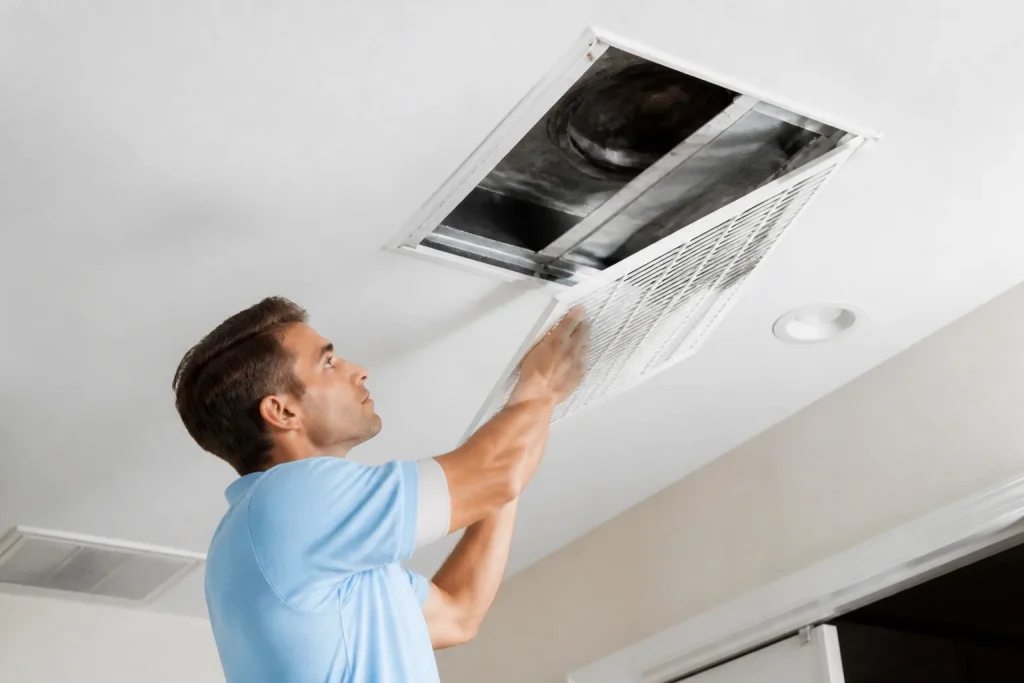
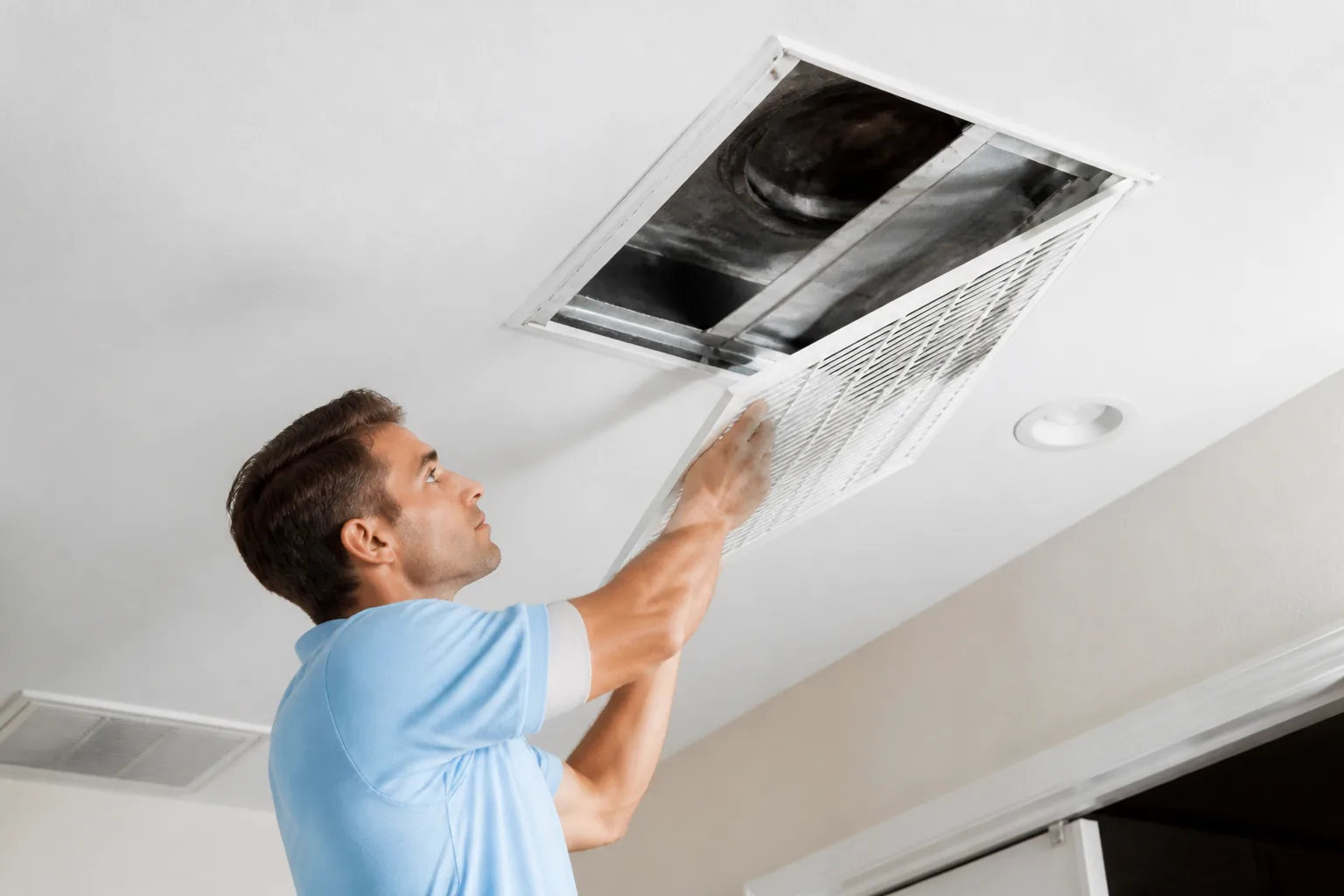
A thin film of dust on a register grille is normal – that’s just air moving through a house. But lift that grille and shine a flashlight into the boot, and the picture changes fast. Gray-brown clumps packed against the duct wall, debris clinging to the metal, a mat of dust where there should be clean galvanized steel. Those two situations look similar from across the room and mean completely different things. Knowing which one you’re actually looking at is the difference between a cleaning you don’t need and a problem you keep ignoring.
We’re going to show you how to tell them apart with your own eyes and a flashlight. And if you’d rather skip the inspection and get a straight assessment, call (888) 611-5717 for a free estimate from Air Duct Cleaning Mayfair.
Dust on Furniture vs. Debris in the Duct: The Distinction That Matters
Dust settling on a coffee table is not a diagnostic sign of dirty ducts. It never has been. Every home has some dust, and every HVAC system moves it around. The question that actually means something is what’s happening inside the duct itself, not what lands on your furniture.
Here’s how to separate the two:
- Non-diagnostic complaints: a fine dust layer on surfaces, occasional stuffiness in a closed room, a vaguely “stale” feeling when you walk in. These can come from filters, humidity, cleaning habits, or just how tight the house is. They don’t point to duct debris.
- Diagnostic signs: visible debris inside the register boot, uneven airflow between rooms, an odor that appears only when the system runs, or a jump in runtime on the thermostat. Each of these maps to a mechanical condition you can verify.
The key word is visible. You’re looking for accumulation you can see with a light, not a feeling you can’t measure. When we inspect a system in Mayfair, that’s the first thing we check – is there actual material in the boot and the branch line, or is the duct clean and the complaint coming from somewhere else entirely. More often than people expect, it’s the second one.
How to Do a Flashlight Inspection of Your Registers
You can produce real diagnostic information in about fifteen minutes with a screwdriver and a flashlight. This isn’t a guess – it’s the same basic check a technician starts with.
- Turn the system off at the thermostat before you start.
- Remove two or three supply register grilles with a screwdriver. Pick rooms that feel different from each other – one that’s always cold, one that’s fine.
- Shine the flashlight up into the boot and down the branch line. Look for clumps, matted dust stuck to the walls, or debris sitting on the bottom of the run.
- Compare airflow between registers by holding a tissue or your hand at each opening with the system back on. Strong even flow is good. A weak register next to a strong one suggests a restriction somewhere in that branch.
- Note the smell. If you catch an odor at the register that only appears when the system runs, that’s information worth writing down.
What you’re looking for is consistency. If every register shows a light even film, your system is probably normal. If one boot is packed with debris and the rest are clean, that’s a localized problem worth solving.
Post-Renovation Debris: Why Drywall Dust Is a Different Animal
Renovation dust is the most common cause of genuinely dirty ducts we see in Mayfair, and drywall dust is the worst offender. It behaves differently from household dust. Ordinary dust is relatively coarse and settles. Drywall dust is fine, abrasive, and stays airborne longer, which means the return side of your system pulls it deep into the ductwork and the air handler before it ever settles.
What it looks like inside the duct: a pale, chalky coating along the bottom of the runs and the return trunk, often thicker near the air handler. It can cake onto the blower wheel and the evaporator coil, which is where it starts costing you.
Two signs that post-renovation debris has reached the point where cleaning matters:
- Airflow has noticeably weakened since the work ended.
- The system runs longer to reach the same temperature it used to hold easily.
If you’ve had walls opened, flooring removed, or a kitchen gutted within the past year or two, this section applies to you more than any other. Cleaning with professional equipment – we use Rotobrush rotary-brush systems that agitate debris off the duct wall rather than just vacuuming at the register – is the way to get drywall dust out of a system that has already absorbed it.
The Efficiency Signals: Runtime, Uneven Rooms, and Your Utility Bill
Restricted airflow from debris doesn’t just affect air quality. It makes your HVAC system work harder to move the same volume of air, and that shows up in three patterns worth watching.
- Increased runtime. If the system used to cycle off regularly and now runs almost continuously to hold the set temperature, airflow restriction is one of the first things to rule out.
- Uneven room temperatures. One room that never quite warms up or cools down, especially when the registers nearby feel weak, points to a blocked or restricted branch line.
- Higher utility bills without a clear cause. No rate change, no weather change, but the bill keeps climbing. A system running longer because it can’t move air efficiently will show up here.
Debris accumulation in a Mayfair home tends to build gradually, so homeowners often adjust to it without noticing. The thermostat schedule gets nudged up or down a degree. A blanket appears on the couch in the cold room. If any of that sounds familiar, the flashlight inspection above will tell you whether airflow restriction is the reason. It’s also worth knowing that the same debris load that hurts airflow is what HVAC cleaning addresses at the source – the air handler and coil compartment, not just the trunk lines.
Odor That Tracks With the System: What Each Smell Actually Means
An odor that appears only when the HVAC system runs is one of the most useful diagnostic clues a duct system gives you, because it points to a specific mechanical condition. Two smells matter most.
Musty smell during operation usually means moisture somewhere in the system – near the evaporator coil, in the drain pan, or in duct liner that has absorbed water. Moisture plus organic dust is the recipe for microbial growth, and moving air carries the result into every room. This is a condition to diagnose, not mask with a spray.
A burning or hot-dust smell when the heat first comes on is worth taking seriously, especially if it persists beyond the first cycle of the season. Debris accumulating on or near the heat exchanger is the concern, and it’s a safety matter, not just a comfort one. Turn the system off and have it checked by a trained professional before running it again.
We say that plainly because it’s true. A musty smell and a burning smell are not the same problem, and treating them as interchangeable wastes time and, in the second case, can be genuinely unsafe.
When to Call a Pro (and When You Probably Don’t Need To)
If your flashlight inspection turned up a light even film across every register and airflow feels balanced, you likely don’t need a cleaning yet. Change your filter on schedule and check again in a year. We’d rather tell you that than sell you work you don’t need.
Call a professional when the signs point to something you can’t fix from the register:
- Visible debris accumulation inside the boot or branch line
- Airflow that’s clearly uneven between rooms
- An odor that tracks with system operation
- Recent renovation with drywall dust in the system
- Rising bills and longer runtime with no other explanation
This is also where a clean-only operation runs out of answers. If the inspection finds a leaky joint, a disconnected run, or a crushed section of flex duct, cleaning alone won’t fix the airflow. We repair and seal ductwork as part of the same visit, which saves you coordinating a second contractor. Cleaning is done with containment in place – Abatement Technologies negative-air and HEPA equipment keeps dislodged material from recirculating into the rooms where you’re standing. Our technicians have up to 8 years of experience, and one call covers the range: dryer vent cleaning, duct repair, and air-quality upgrades if you want better filtration or humidity control once the ducts are clean.
Related services in Mayfair: full air duct cleaning for the whole system, and if you want to start with the smaller job, our Air Duct Cleaning Mayfair team can talk you through both.
The Bottom Line
The signs that actually matter are the ones you can see and verify: debris visible inside the register boot, uneven airflow between rooms, an odor that appears only with the system running, longer runtime, and a utility bill that keeps climbing without a reason. Dust on your furniture and a vague sense that the house feels stuffy aren’t on that list. Check with a flashlight first, and let what you find guide the decision.
If you’re in Mayfair and need help, Air Duct Cleaning Mayfair offers free estimates – call (888) 611-5717. We answer 24/7. Fast dispatch from 7am to 7pm, Sunday through Friday.
Frequently Asked Questions
Look inside a supply register boot with a flashlight and check for visible debris stuck to the duct walls, plus compare airflow between rooms. Visible accumulation, uneven flow, or an odor that only appears when the system runs are the real indicators. Dust on furniture alone doesn’t tell you anything about the duct interior. Call (888) 611-5717 for an exact quote – estimates are free.
There’s no fixed calendar interval that fits every home. A household with a recent renovation, pets, or a smoker usually needs it sooner than a home with steady filtration and no recent work. Inspect annually and clean when the flashlight check shows actual accumulation. Call (888) 611-5717 for an exact quote – estimates are free.
Low quotes usually cover vacuuming at the register without agitating debris off the duct walls or containing what gets dislodged. A full source-removal clean with rotary-brush equipment and negative-air containment is a different job with different labor behind it. We’d rather show you what the work involves than compete on a number that doesn’t cover it. Call (888) 611-5717 for an exact quote – estimates are free.
Ask for before-and-after photos of your own duct interior, and watch whether containment and negative-air equipment is set up before cleaning starts. A cleaning you can document with images from inside your own system is verifiable. An invoice that just says “duct cleaning” isn’t. We answer 24/7 – call (888) 611-5717 for an exact quote, and estimates are free.
Written by the team at Air Duct Cleaning Mayfair.
Need Air Duct Cleaning Help?
Call Air Duct Cleaning Mayfair - the local pro we connect you with is licensed and insured, here with fast help in Mayfair.
(888) 611-5717