
Last updated November 25, 2026
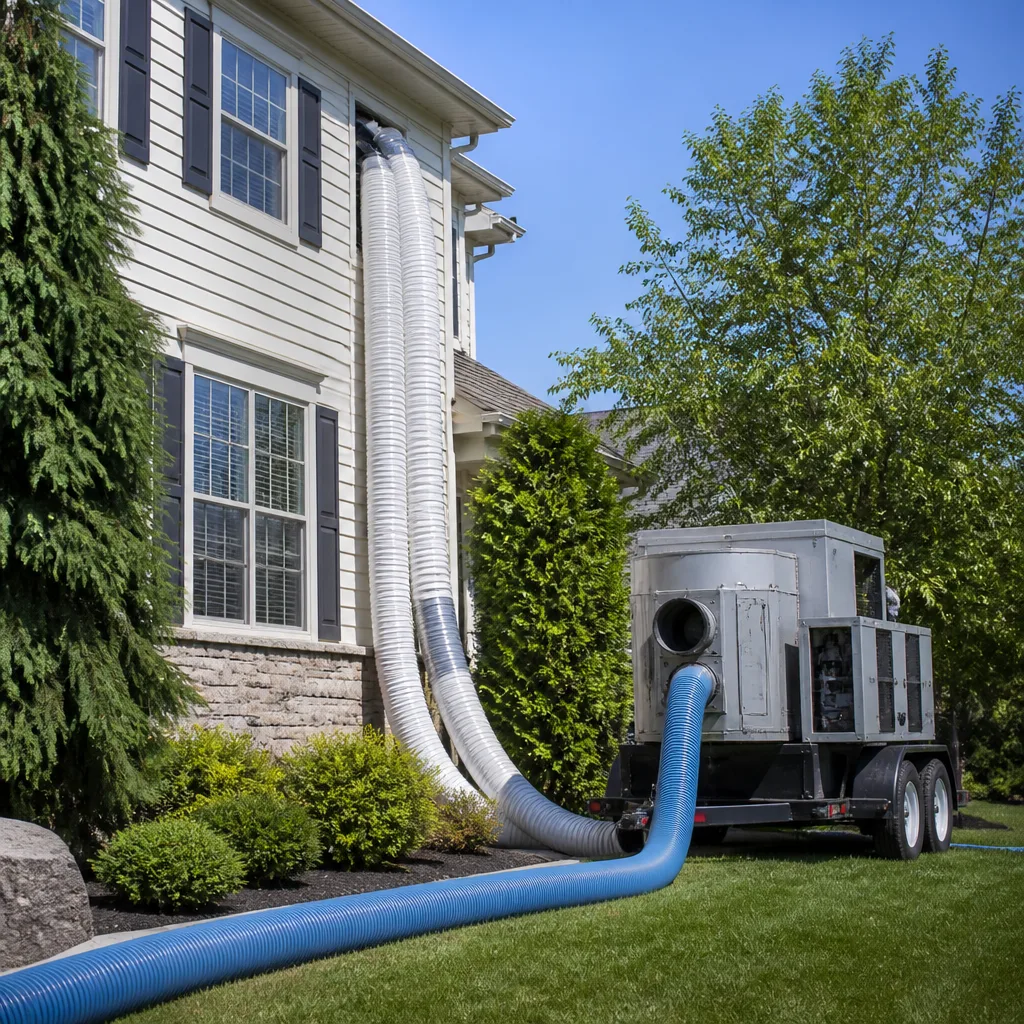 Whole-home duct cleaning
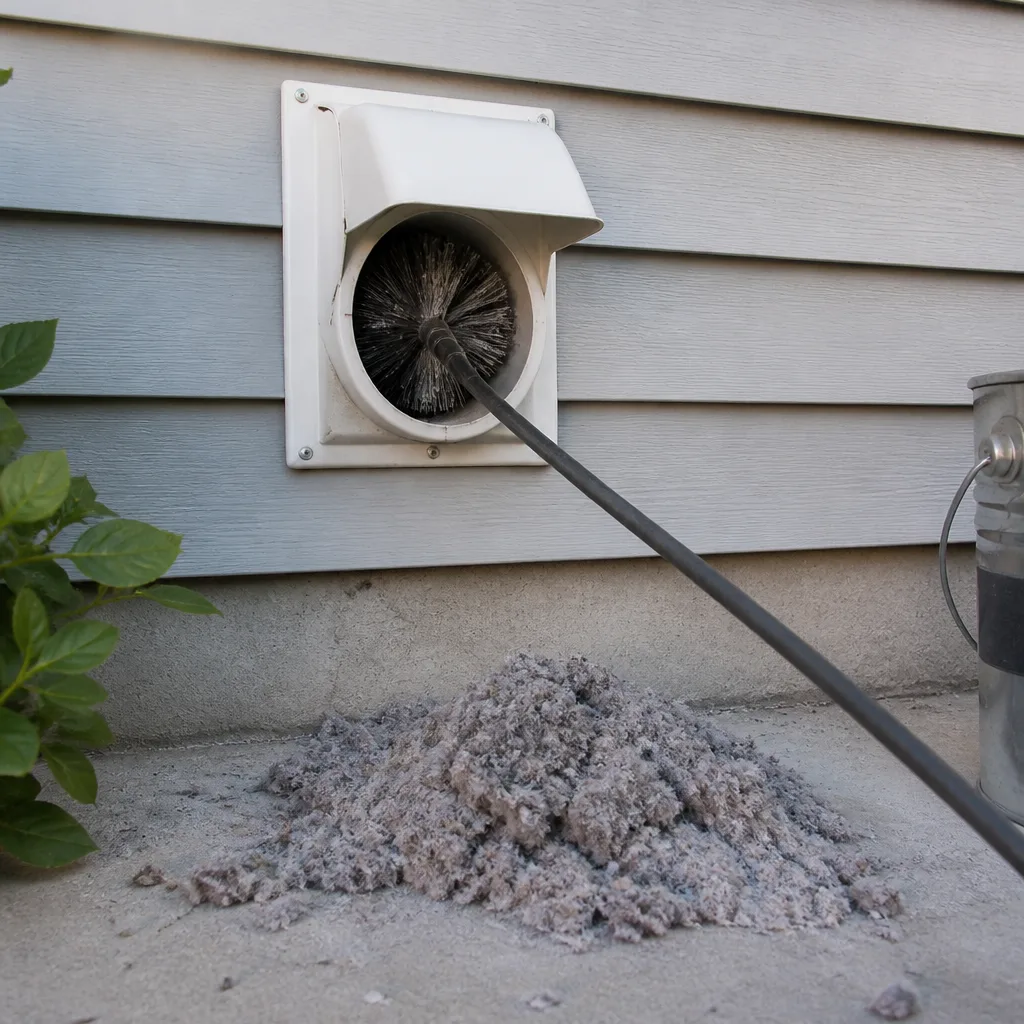 Dryer vent cleaning
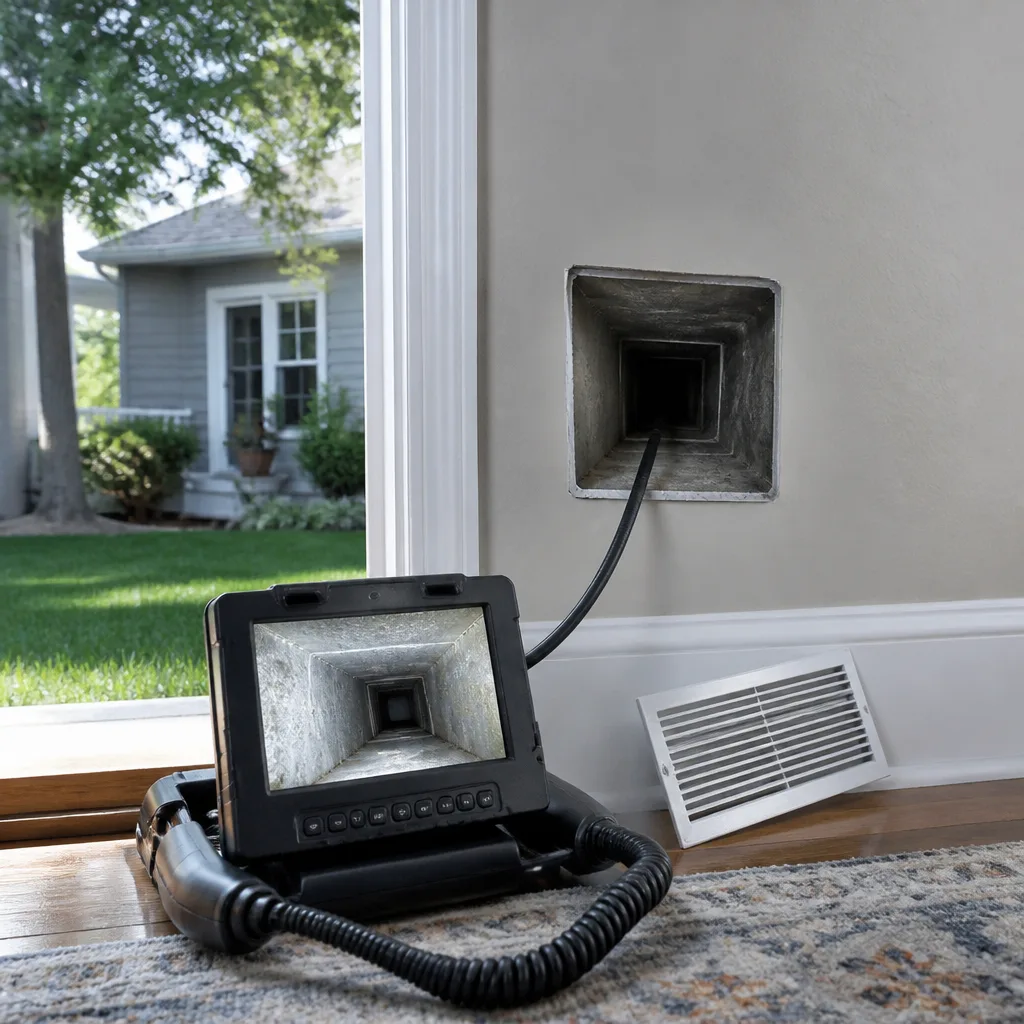 Camera inspection
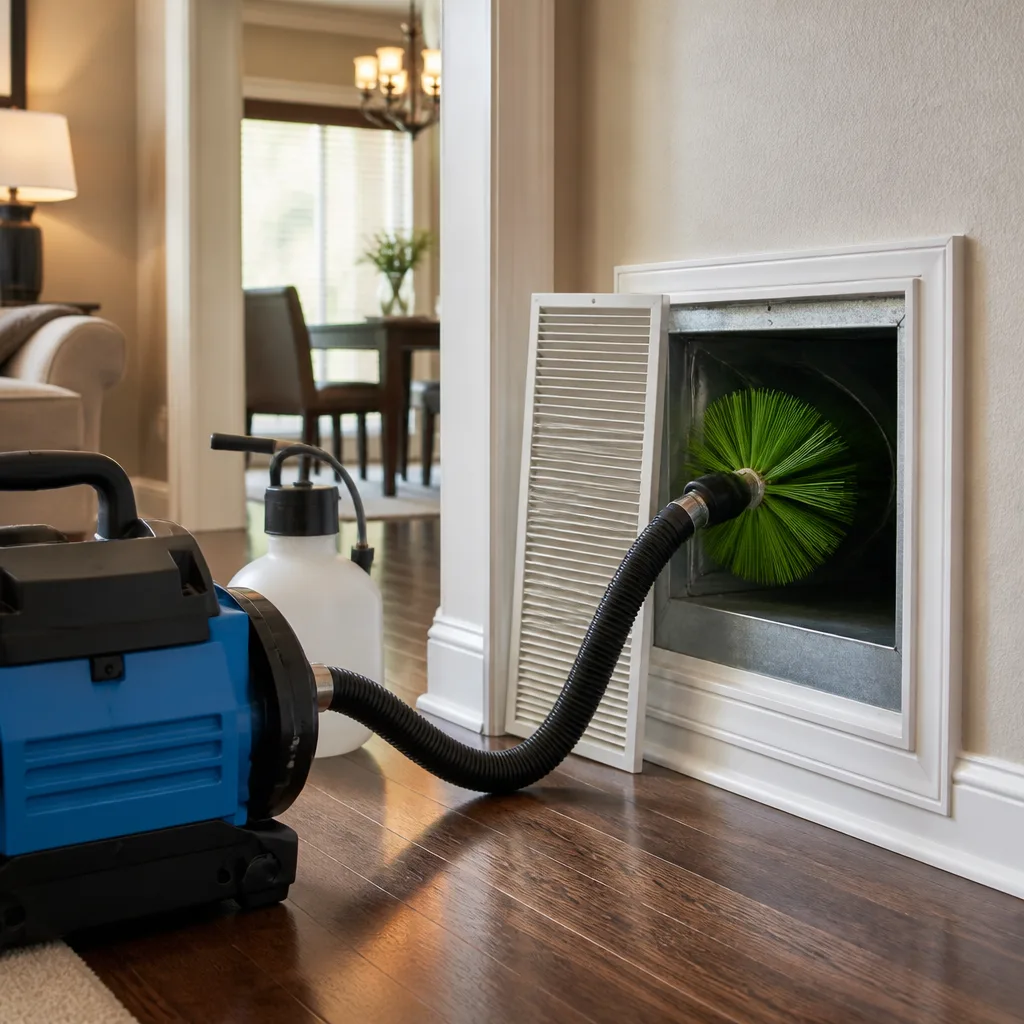 Sanitizing & deodorizing
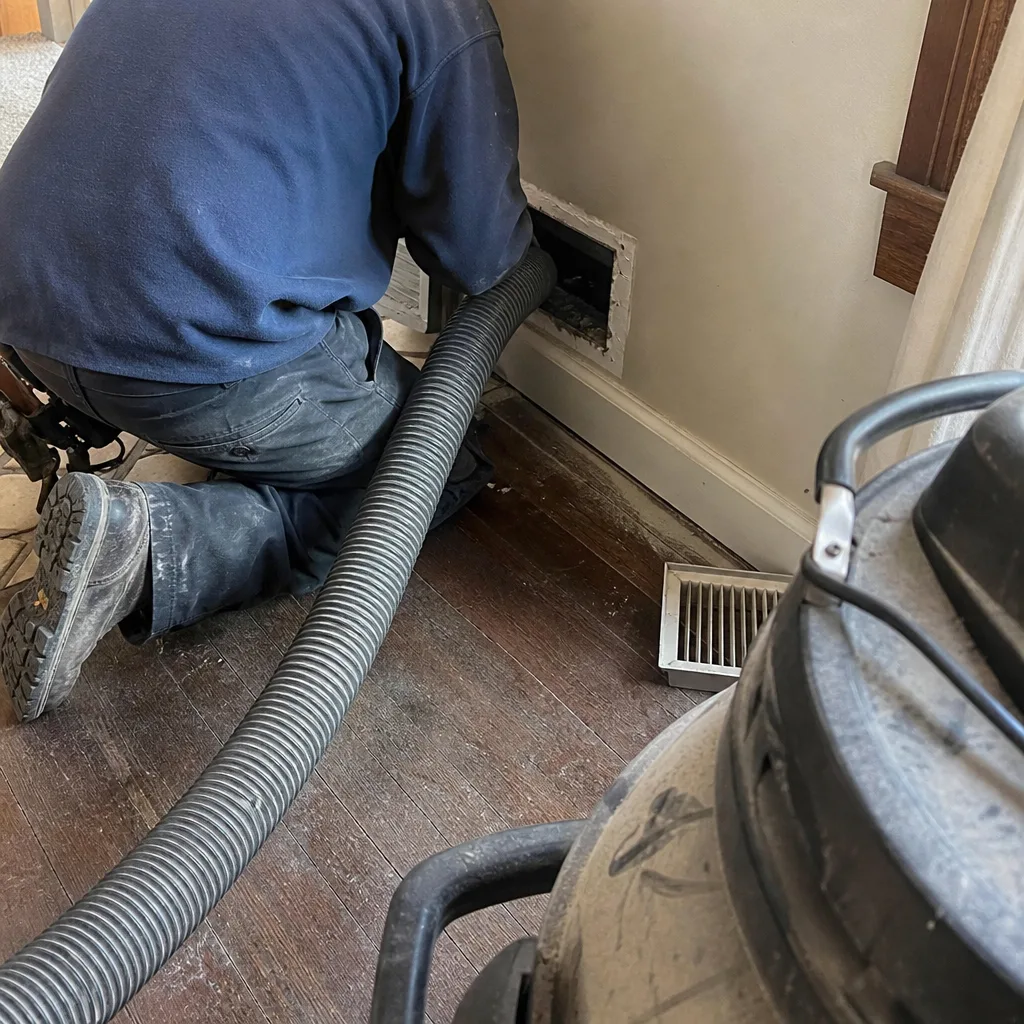
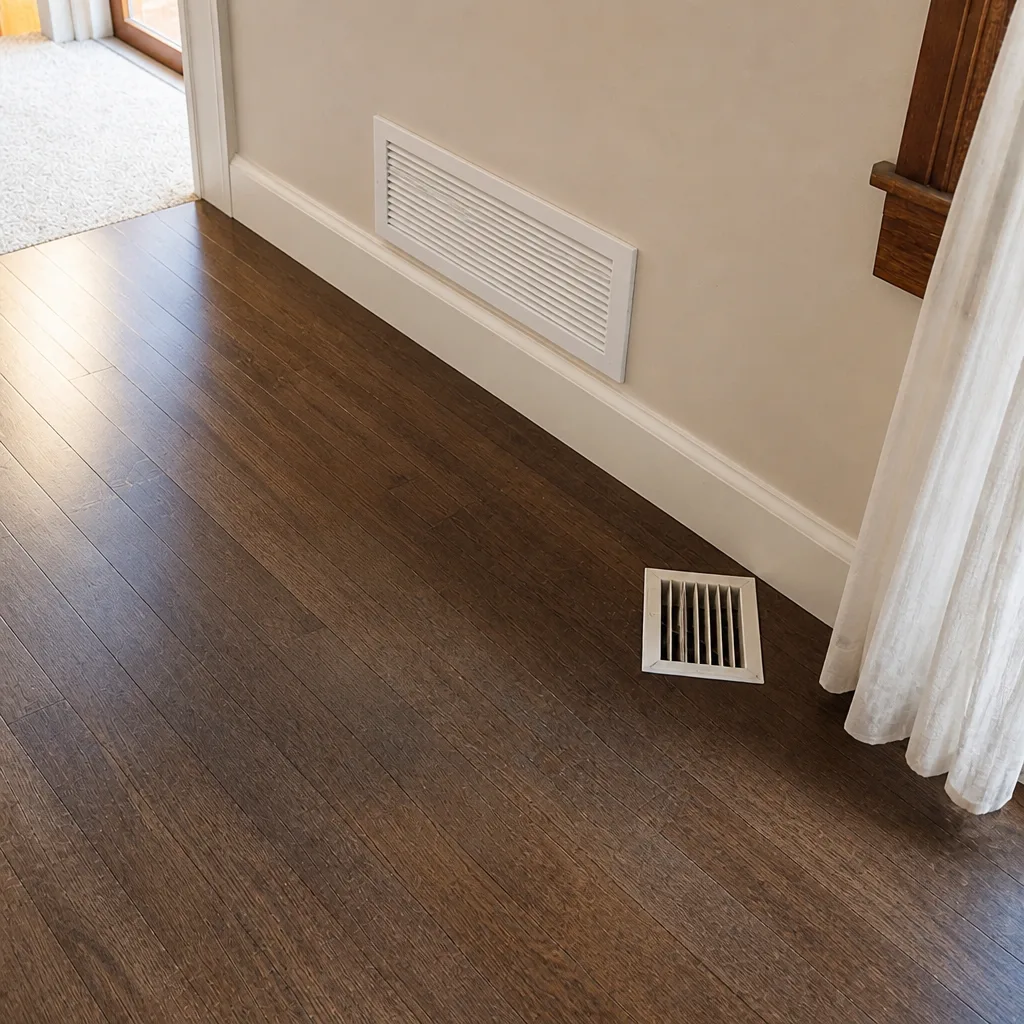
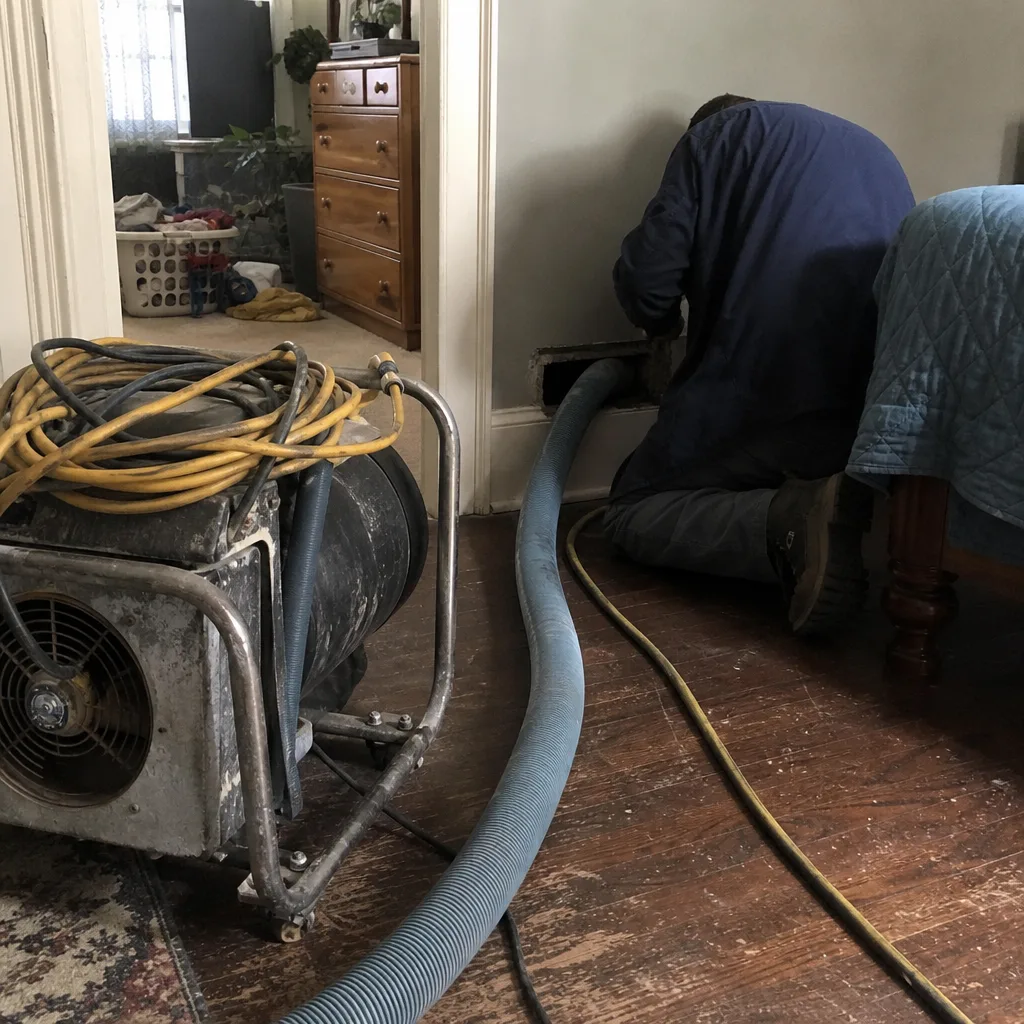
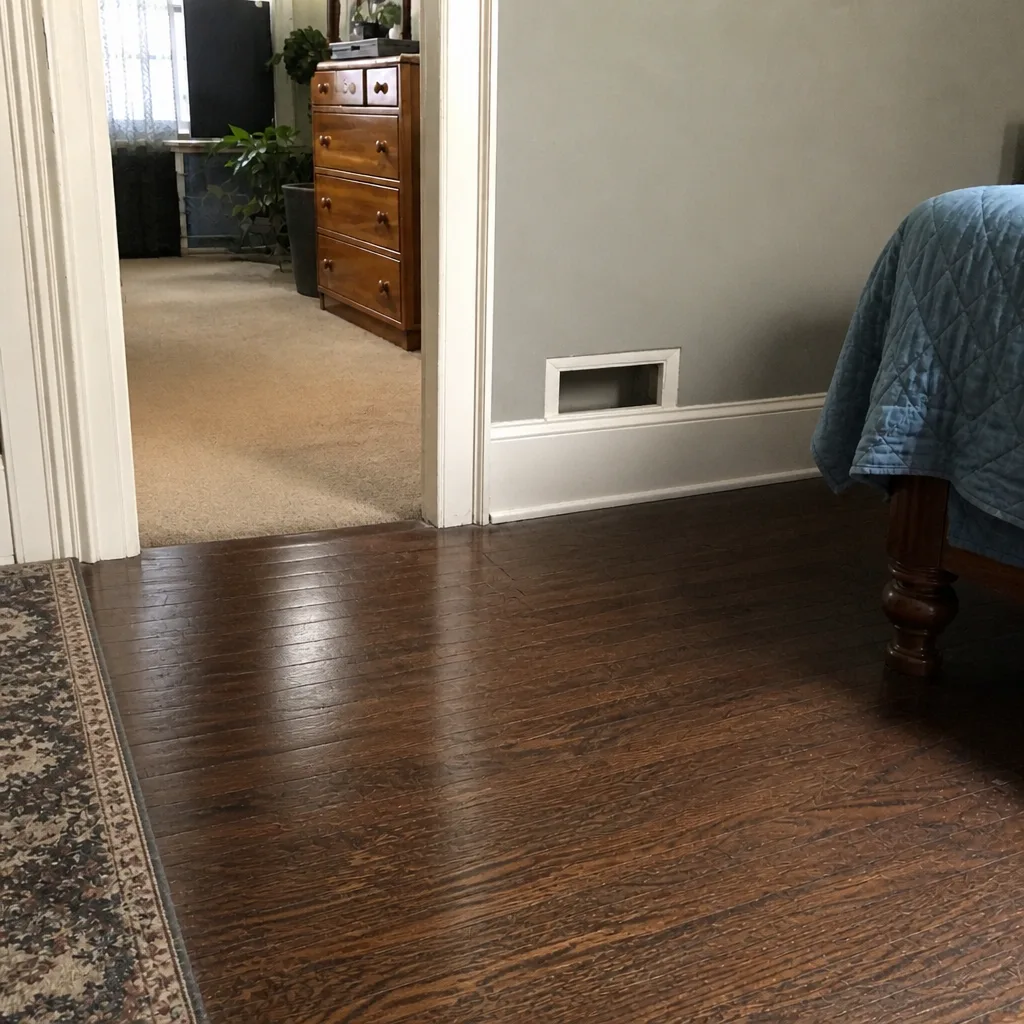
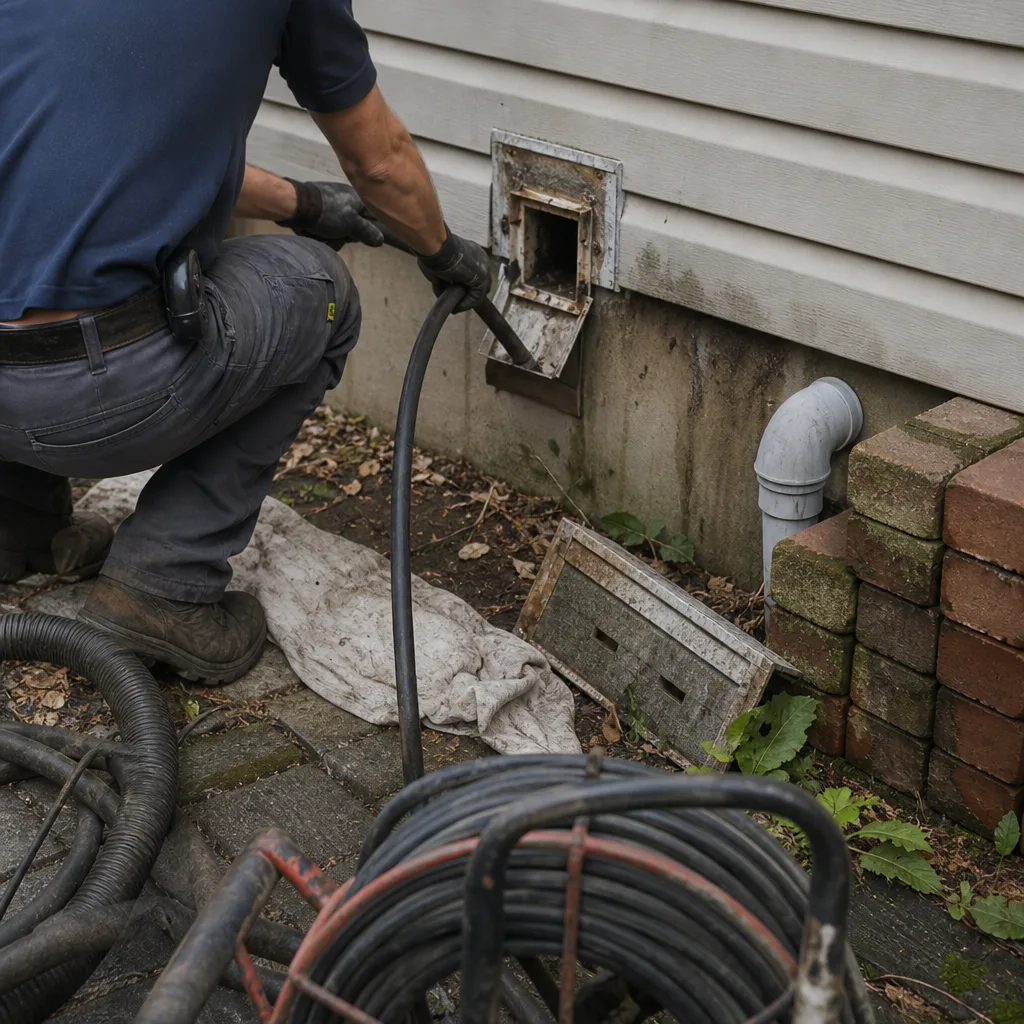
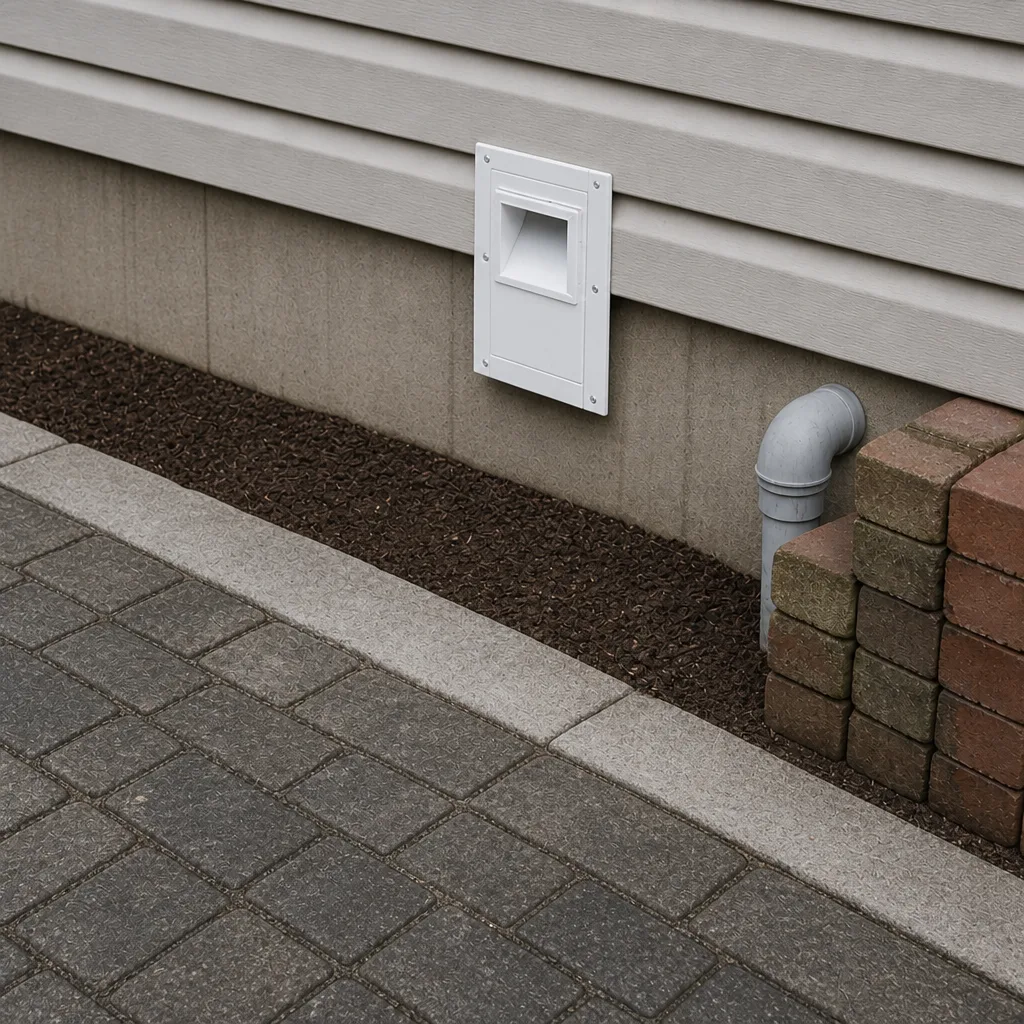
Whole-system duct and dryer vent check with before-and-after photos - you see exactly what came out of your vents
That "$99 whole-house special" is a bait ad - the real number appears once they are in your hallway, or the "clean" is a shop-vac at the register. We photograph the inside of your ducts before and after instead.
DIY vs Professional Air Duct Cleaning: The Mayfair Homeowner’s Decision Guide
Attaching a shop vac to a duct register doesn’t clean the duct. It redistributes loosened debris into the air column and can pull material from deeper sections back into your rooms, which is often worse than leaving the duct alone. That distinction (vacuuming at the opening versus cleaning under controlled negative pressure) is the line most homeowners never see explained. This guide covers what you can legitimately do yourself, where the DIY boundary ends, and how the two approaches fit together over the life of a Mayfair home. You’ll finish knowing which tasks are safe, which just move dust around, and what a professional job actually delivers.
Styles & brands we work with
- Whole-home duct cleaning
- Dryer vent cleaning
- Camera inspection
- Sanitizing & deodorizing
Quick Answer
You can and should handle register cleaning, return-grille washing, and visual inspection with a phone camera yourself. Mechanical cleaning of the duct runs, air handler, and coil compartment is a professional job, because it requires negative-pressure containment and rotary agitation that ordinary vacuuming can’t replicate. The realistic DIY saving on a whole-system cleaning is small; the realistic risk of a DIY attempt on an older Mayfair duct system is pushing loose debris into living space or damaging unsealed fittings.
Table of Contents
- Where the DIY Boundary Actually Sits
- What You Can Safely Do at the Register Level
- Why Negative-Pressure Containment Is the Real Dividing Line
- Mayfair Housing Stock and Where DIY Goes Wrong
- What the DIY Saving Really Is Compared to Professional Work
- Using DIY Maintenance Between Professional Cleanings
- The Equipment Behind the Difference
- Common Mistakes to Avoid
- When to Call a Professional
- Frequently Asked Questions
- The Bottom Line
Where the DIY Boundary Actually Sits
The DIY question isn’t about capability. A homeowner with a screwdriver, a bucket, and a phone on a selfie stick can reach a surprising amount of a duct system. The question is what happens to the debris once it detaches. Cleaning is never just “remove dust.” It’s “detach dust and then capture it.” Any method that divides those two steps will put material back into the air you breathe.
There’s a clean way to think about it. Divide the duct system into three zones.
- The register and grille zone (the metal covers you can unscrew). This is yours. Washing return grilles and vacuuming supply registers removes the visible layer of dust that everything downstream passes through.
- The accessible duct run (the pipe between the register and the trunk). This is inspection territory. A phone camera can tell you whether flex duct is crushed, whether a joint is taped, whether insulation is torn. It can’t tell you how much settled dust sits along the bottom six feet in.
- The trunk, plenum, air handler and coil. This is professional territory. Reaching it means opening the system at points that must be resealed correctly, and working in an enclosed space where dislodged dust needs somewhere to go other than your living room.
In our experience, most Mayfair homeowners who end up calling us have already tried the first zone, guessed at the second, and discovered the third is where the actual job lives. The first two zones are worth doing, and worth doing well. The third is where you need equipment you can’t buy at a hardware store. If you want to see the full scope of what a professional service covers, the air duct cleaning page lays out the whole-system process step by step.
What You Can Safely Do at the Register Level
This is the part of duct maintenance that’s genuinely yours, and doing it well makes a measurable difference to how fast the system gets dirty again. Register-level maintenance is low-risk, requires no special equipment beyond a screwdriver and a vacuum with a brush attachment, and takes about an hour for a typical Mayfair home.
Step 1: Turn the system off
Switch the thermostat to off before you touch anything. You don’t want the blower pulling dust through the house while you’re loosening it. Wait for the fan to stop completely.
Step 2: Remove and wash the return grilles
Return grilles are the large louvered covers, usually in a hallway wall, a ceiling, or a floor near the thermostat. They pull air back into the system, and they collect the thickest dust layer in the house because they’re the first filter the air meets. Unscrew them, wash them in a tub with dish soap and warm water, dry them fully, and reinstall. Do this every few months. A clogged return grille raises static pressure across the blower, which shows up as weak airflow in rooms far from the furnace.
Step 3: Vacuum supply registers with a soft brush
Supply registers are the ones that blow air out. Vacuum the face and the visible throat of the boot, the rectangular metal box behind the register, with a brush attachment on low suction. Don’t jam a crevice tool down the duct; you’ll loosen dust you can’t capture.
Step 4: Inspect with your phone camera
Set your phone to video with the flash on, tape it to a length of stiff wire or a selfie stick, and slide it three or four feet into a supply run. Record for twenty seconds, then review. What you’re looking for:
- Flex duct that’s collapsed or kinked, which chokes airflow
- Torn or missing insulation on the outside of the duct
- Joints where the tape has dried out and let go
- Visible debris piles or pest activity
- Duct boots that don’t sit flush against the drywall or subfloor
Bring that video to any conversation about your system, whether it’s with us or anyone else. It’s the single most useful piece of information a homeowner can gather without tools, and it tells a technician exactly where to start.
Why Negative-Pressure Containment Is the Real Dividing Line
A shop vac pulls air toward its nozzle. A professional duct cleaning rig does something structurally different: it puts the whole duct run under negative pressure, so the entire system is drawing air inward while the technician dislodges debris with a rotary brush. Nothing that comes loose has a path back into the room. That’s the difference between cleaning a duct and stirring one up.
Picture a supply run with a shallow layer of settled dust along the bottom of a thirty-foot flex duct. A shop vac at the register removes what’s within reach of the nozzle, maybe the first few feet. But the suction also disturbs the air column deeper in the run, lifting that settled layer into suspension. The blower comes back on, and the suspended material travels to the nearest path of least resistance, which is usually a register in an adjacent room. The homeowner sees a dust film on furniture the next day and concludes the ducts were dirty. In reality, the ducts were disturbed.
Professional work handles this with three things working together:
- Containment. We use Abatement Technologies negative-air machines, the same class of gear used in remediation work, to hold the workspace under pressure and capture what’s released before it circulates.
- Contact agitation. Rotobrush rotary-brush systems physically scrub the duct walls rather than relying on airflow alone. Settled, compacted dust needs contact to come off; suction by itself won’t move it.
- Source removal at the air handler. Nikro professional HVAC equipment lets us clean the air handler and coil compartment, where the heaviest accumulation lives and where a register-level vacuum can’t reach at all.
This is why we treat containment as non-negotiable rather than an upgrade. It isn’t a premium feature; it’s the thing that makes the cleaning a cleaning. The Air Duct Cleaning Mayfair service overview explains how those systems are sequenced on a typical job.
Mayfair Housing Stock and Where DIY Goes Wrong
Mayfair’s housing stock spans a wide range, and older homes carry duct systems that were installed to the standards of their era. That matters for the DIY question, because a duct system that’s already compromised responds to amateur cleaning worse than a tight modern one does. Three specific vulnerabilities show up repeatedly in Mayfair homes.
Flex duct that’s already sagging
Flexible duct is a plastic membrane over a wire helix, wrapped in insulation. It’s cheap, fast to install, and easy to crush. In a Mayfair attic or crawlspace, runs that have sagged or been stepped on during other work develop low spots where dust settles and moisture can collect. Pushing a shop vac into a sagging flex run applies suction that can collapse the helix further, permanently reducing airflow to that room. A rotary brush under controlled pressure is gentler on the structure and far more effective on the debris.
Unsealed boots and loose connections
The boot is the transition fitting between the duct and the register opening. In a lot of Mayfair homes, especially where finished basements or additions were done, boots aren’t sealed to the framing. That gap pulls air from inside the wall cavity, attic, or crawlspace straight into your supply air. DIY cleaning never addresses this, because you can’t see it from the register and you can’t seal it without opening the system. It’s one reason we keep HVAC cleaning and duct repair in the same visit: a clean, leaky duct is still a leaky duct.
Short elbows and tight transitions
Older homes often have sharp ninety-degree elbows and cramped transitions off the trunk. These are the spots that collect the most debris and the spots a shop vac reaches least effectively. When you disturb material there without containment, it has nowhere to go but into the room.
None of this means older Mayfair homes are a problem. It means the DIY margin for error is thinner in them, and the payoff for professional work is larger.
What the DIY Saving Really Is Compared to Professional Work
Set aside the coupon advertisements and look at the actual arithmetic. A homeowner doing register-level maintenance is saving the cost of nothing, because a professional cleaning doesn’t price that work separately; it’s included. What DIY buys you is the interval between professional cleanings, extended by consistent register maintenance. What DIY cannot buy you is the cleaning itself.
Here’s the honest breakdown of what each approach covers:
- Register and grille washing: DIY handles this fully. Professional service includes it.
- Visible dust removal in the first few feet of supply runs: DIY partially handles it. Professional service handles it under containment with rotary agitation.
- Settled debris in trunk lines and flex runs beyond arm’s reach: DIY cannot handle it. Professional service handles it.
- Air handler and coil compartment cleaning: DIY cannot handle it and shouldn’t attempt it. Professional service handles it.
- Sealing unsealed boots and repairing loose joints: DIY cannot handle it without opening the system. Professional service handles it in the same visit.
- Sanitizing and surface protection: DIY can’t do it properly. Professional service applies a product like Guardsman-grade protection as part of finishing.
- Air-quality upgrades after cleaning: DIY can buy a filter but can’t match the system. We install Honeywell and Aprilaire products sized to the duct system.
The saving from DIY is real but small, and it’s concentrated in the register-level work. The professional value is concentrated in everything else: containment, source removal, sealing, and air-quality correction. If you want a written estimate for your specific system, that’s where the conversation should start. Call (888) 611-5717. We answer 24/7. Fast dispatch from 7am to 7pm, Sunday through Friday. Estimates are free and the price is set per job in writing before any work begins.
Using DIY Maintenance Between Professional Cleanings
The two approaches aren’t competing. Used together they extend the interval between professional visits and lower the lifetime cost of keeping the system clean. Here’s a maintenance routine that makes professional cleanings last longer, written for Mayfair homes with a mix of forced-air heating and central cooling.
Monthly
- Check the filter. If it’s loaded, replace it. A dirty filter is the single largest contributor to dust in ducts.
- Look at the return grilles. If you can see a visible grey film, they’re due for washing.
Every few months
- Wash the return grilles with dish soap and warm water, dry fully, reinstall.
- Vacuum supply register faces and the visible throat of each boot with a brush attachment.
- Run a phone-camera inspection on one or two runs, rotating which ones you check.
Annually
- Walk the attic or crawlspace with a flashlight. Look for disconnected flex duct, torn insulation, and sagging runs. Reconnect anything that’s separated and tape it with the appropriate foil tape.
- Check that boots are sealed to the drywall or subfloor. If you can feel air moving at the gap when the system runs, it’s leaking.
- Look at the outdoor dryer vent flap. If it doesn’t open and close firmly, it’s clogged or stuck. That’s a separate service, dryer vent cleaning, and it’s about fire safety as much as airflow.
That routine is worth doing. It’s also the maximum that a homeowner should attempt without professional containment. Everything below the register face belongs to the technician.
The Equipment Behind the Difference
It’s fair to ask why a technician can’t just do the same thing with better tools. The answer is that the tools work as a system, and the system is what you’re paying for. Here’s what each piece contributes.
- Rotobrush contact-cleaning systems. A rotary brush on a flexible whip that physically scrubs the interior of the duct while a HEPA-filtered vacuum captures what’s released. This is contact cleaning, the method the industry specifies for source removal. It’s the same class of equipment used by NADCA-trained contractors.
- Nikro professional HVAC equipment. Source-removal cleaning of the air handler and coil compartment. This is where the dirtiest surfaces in the whole system live, and where a shop vac has no business being.
- Abatement Technologies negative-air machines. The containment layer. These hold the work area under pressure so dislodged particulates go into the machine and not into your rooms.
- Honeywell and Aprilaire air-quality products. Post-cleaning upgrades. Once the ducts are clean, filtration and humidity control determine how fast they stay that way. We size and install these as part of the same engagement.
- Guardsman-grade surface protection. Applied as part of sanitizing and finishing, so the surfaces that dust settles on are treated, not just wiped.
None of this is exotic. It’s the standard kit for a professional cleaning. It’s also gear that lives on a service vehicle and not in a garage, which is why the DIY boundary exists in the first place.
Common Mistakes to Avoid
- Vacuuming deep into a duct without containment. This is the mistake that turns a dirty duct into a dirtier room. You loosen more than you capture, and the blower does the rest. If you can’t hold the whole run under negative pressure, stay at the register face.
- Using a shop vac on a flex run and collapsing it. Flex ducting has a wire helix that does not recover from a strong pull. A crushed run loses airflow permanently and has to be replaced, which costs far more than the cleaning you were trying to avoid.
- Assuming a dusty vent means the whole system is dirty, or a clean vent means it isn’t. The first few feet and the register face are the least informative part of the system. A phone-camera inspection tells you far more than the surface does.
- Skipping the filter change before cleaning. Cleaning a system and then running a loaded filter is wasted effort. Replace the filter at the same time, and consider an upgrade if it’s been more than a year.
- Taping over a boot gap without investigating. A gap between the boot and the framing pulls air from the cavity. Tape it, yes, but also find out why it was never sealed and whether the cavity has moisture. In a Mayfair attic that gap is often the first visible sign of a bigger airflow problem.
- Cleaning the ducts but leaving unsealed connections. A clean duct with leaks is a clean duct that gets dirty again quickly. If you’re going to the trouble, seal what you can reach and have a technician seal the rest.
- Ignoring the dryer vent because it’s “not part of the HVAC.” It’s a ventilation system in its own right, and a clogged one is a fire risk. It’s on our service menu for that reason.
When to Call a Professional
Call a professional when any of the following is true: you’ve noticed a consistent dust film on surfaces within days of cleaning; a room has noticeably weaker airflow than the rest of the house; someone in the home has allergy or respiratory symptoms that get worse indoors; the system hasn’t been serviced in several years; you’re moving into a Mayfair home and don’t know its service history; you’ve seen visible debris, pest activity, or moisture inside a run; or your return grilles keep clogging faster than they should. Any of these points to a source-removal job rather than register maintenance, and a phone-camera inspection is a good way to confirm before you book.
Air Duct Cleaning Mayfair offers free estimates in Mayfair. Call (888) 611-5717. We answer 24/7. Fast dispatch from 7am to 7pm, Sunday through Friday. The technician will look at your system, tell you what actually needs doing, and give you one flat price per system in writing before any work starts.
Frequently Asked Questions
You can clean the register faces, grilles, and the first few feet of a supply run, but you shouldn’t push a shop vac deep into the system. A shop vac pulls air toward the nozzle while loosening dust throughout the run, and without negative-pressure containment that dust ends up in your rooms. That’s why professional cleaning uses rotary agitation under containment rather than suction alone.
Pricing depends on the size of the system, the number of runs, accessibility, and whether repair or sealing is needed, so we don’t quote generic figures. The estimate is free, and the price is set per job in writing before work begins. Call (888) 611-5717 for an exact quote. Estimates are free.
Cheap quotes usually leave out the three things that make cleaning a cleaning: containment, rotary contact agitation, and source-removal cleaning at the air handler. What you get for a low figure is often register-level vacuuming with no containment, which disturbs more debris than it removes. We use Rotobrush, Nikro, and Abatement Technologies equipment on every job because leaving any of those out changes the outcome, not just the price. Call (888) 611-5717 if you want a quote that spells out what’s included.
Ask for before-and-after photos of your own ducts, not stock photos. A contractor working with containment and rotary brush equipment has a camera in the run during the job, so the evidence exists. We take before-and-after photos as standard. If a contractor can’t show you what they cleaned, that’s the answer to the question.
Most homes don’t need annual cleaning. A reasonable interval is every three to five years for a typical system with good filter maintenance, and sooner if you’ve had renovations, water intrusion, pest activity, or a new pet. Mayfair homes with older flex duct and unsealed boots tend to benefit from a check sooner, even if the full cleaning can wait. Call (888) 611-5717 for an honest assessment of your system.
Yes, and it’s the highest-value thing a homeowner can do. Regular filter changes, return-grille washing, register vacuuming, and phone-camera inspections keep dust load down between professional visits. That extends the interval and lowers lifetime cost. What DIY can’t do is the source removal itself, so treat it as maintenance, not a substitute. Call (888) 611-5717 when you’re ready to book the cleaning.
The Bottom Line
The DIY-versus-professional question has a clear answer once you understand where the boundary sits. Register cleaning, grille washing, filter changes, and phone-camera inspections are yours, and doing them consistently is worth real money over the life of the system. Mechanical cleaning of the trunk, runs, and air handler is a professional job, because the absence of negative-pressure containment turns a DIY attempt into a redistribution of debris rather than a removal. In a Mayfair home with older flex duct or unsealed boots, that risk is higher, and the payoff for professional work is larger. Do the maintenance yourself. Book the cleaning. That’s the whole decision.
Ready to talk about your system? Call (888) 611-5717. We answer 24/7. Fast dispatch from 7am to 7pm, Sunday through Friday. The estimate is free, the price is one flat figure per system in writing, and you’ll see before-and-after photos of your own ducts when the work is done. Our technicians have up to 8 years of experience, and the local pro we connect you with is licensed and insured as the state requires.
Written by the team at Air Duct Cleaning Mayfair.
See the difference
 Before
 After
 Before
 After
 Before
 After