
Last updated November 25, 2026
 Whole-home duct cleaning
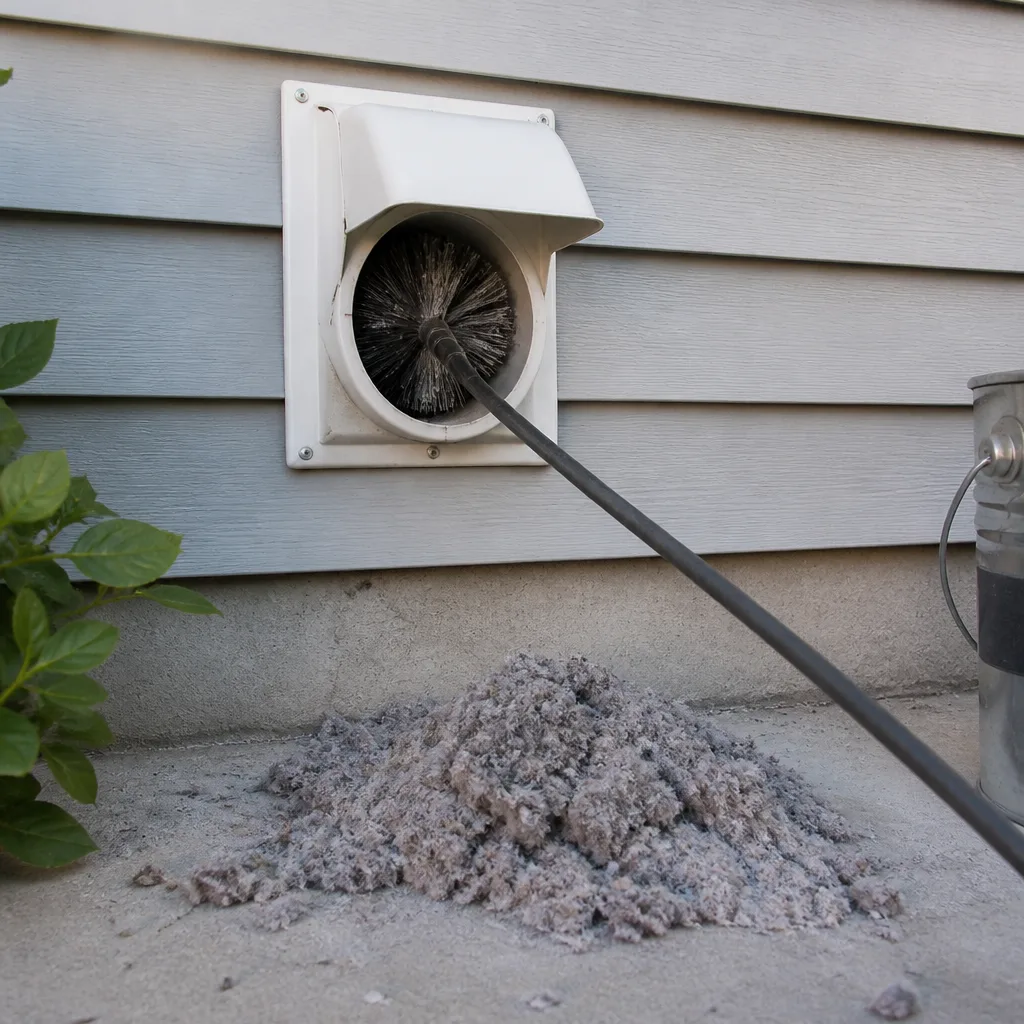 Dryer vent cleaning
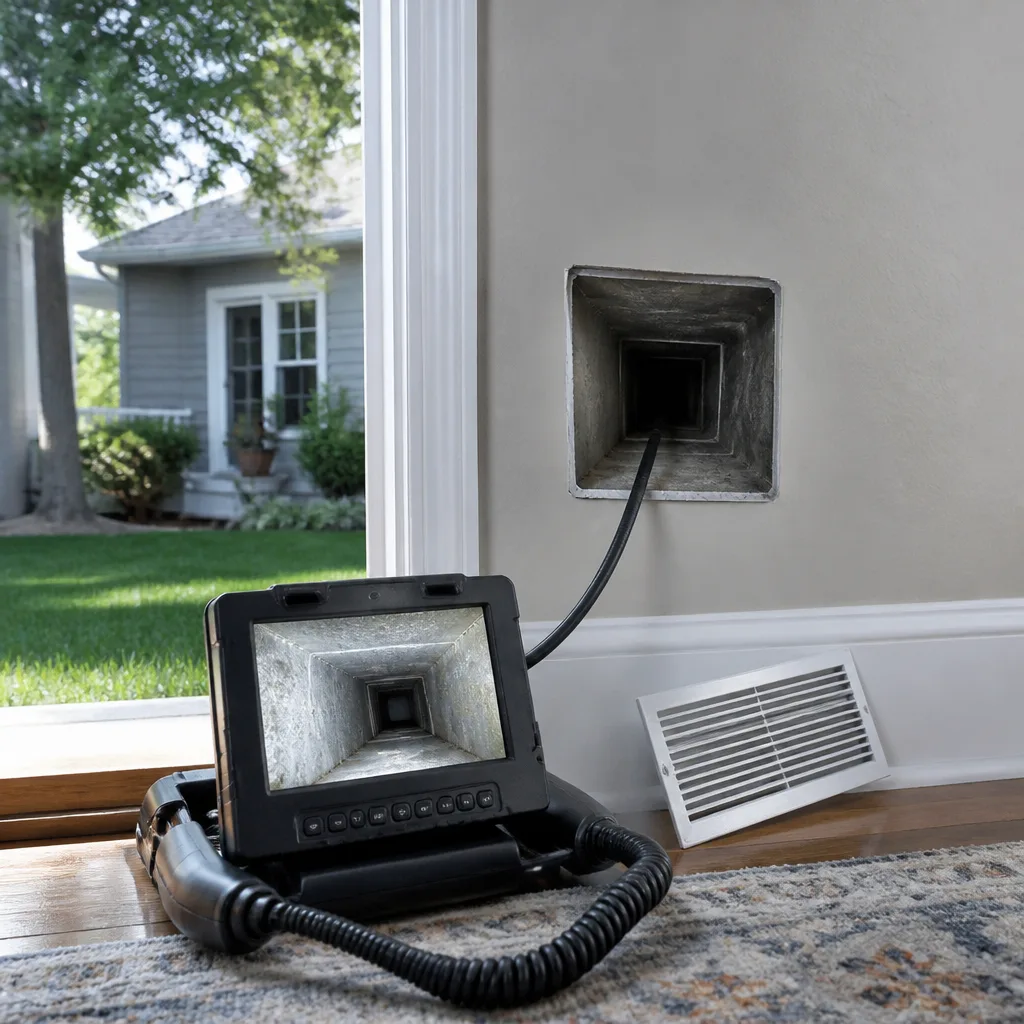 Camera inspection
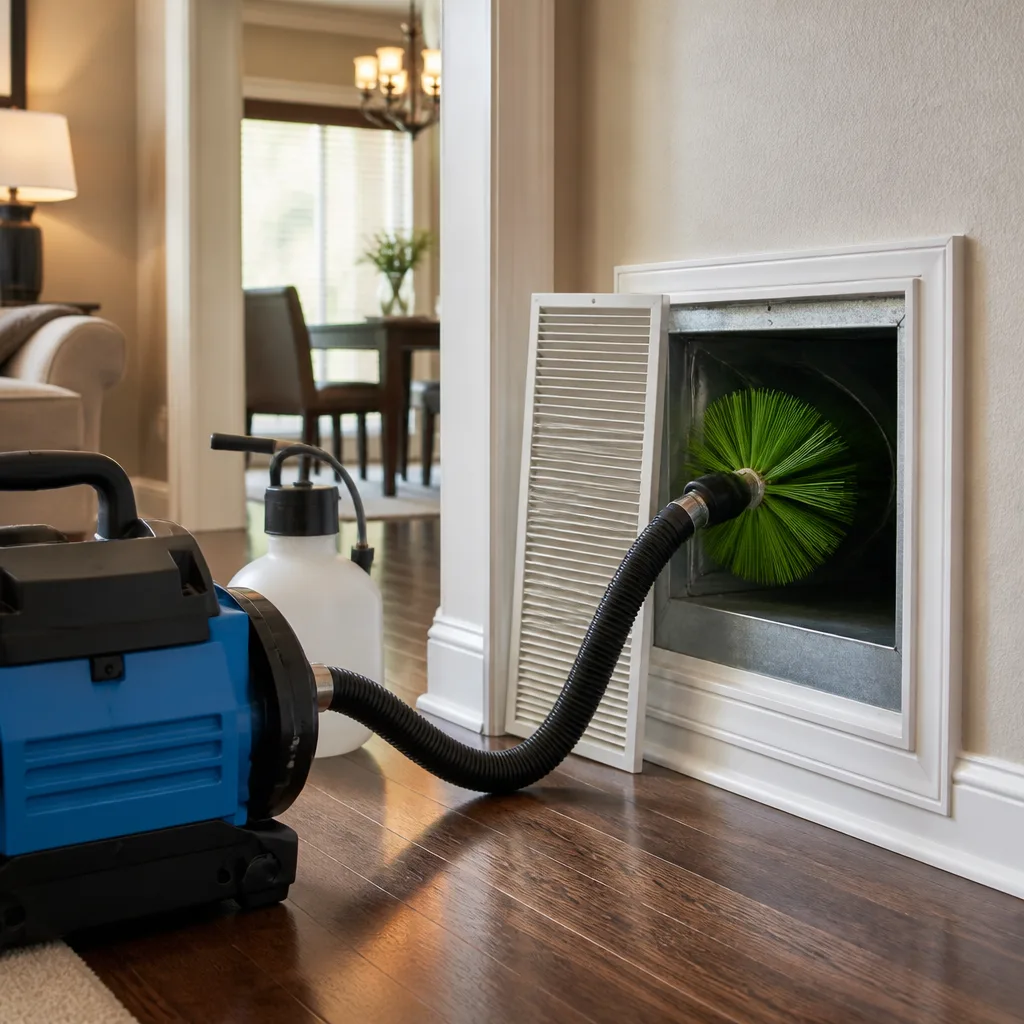 Sanitizing & deodorizing
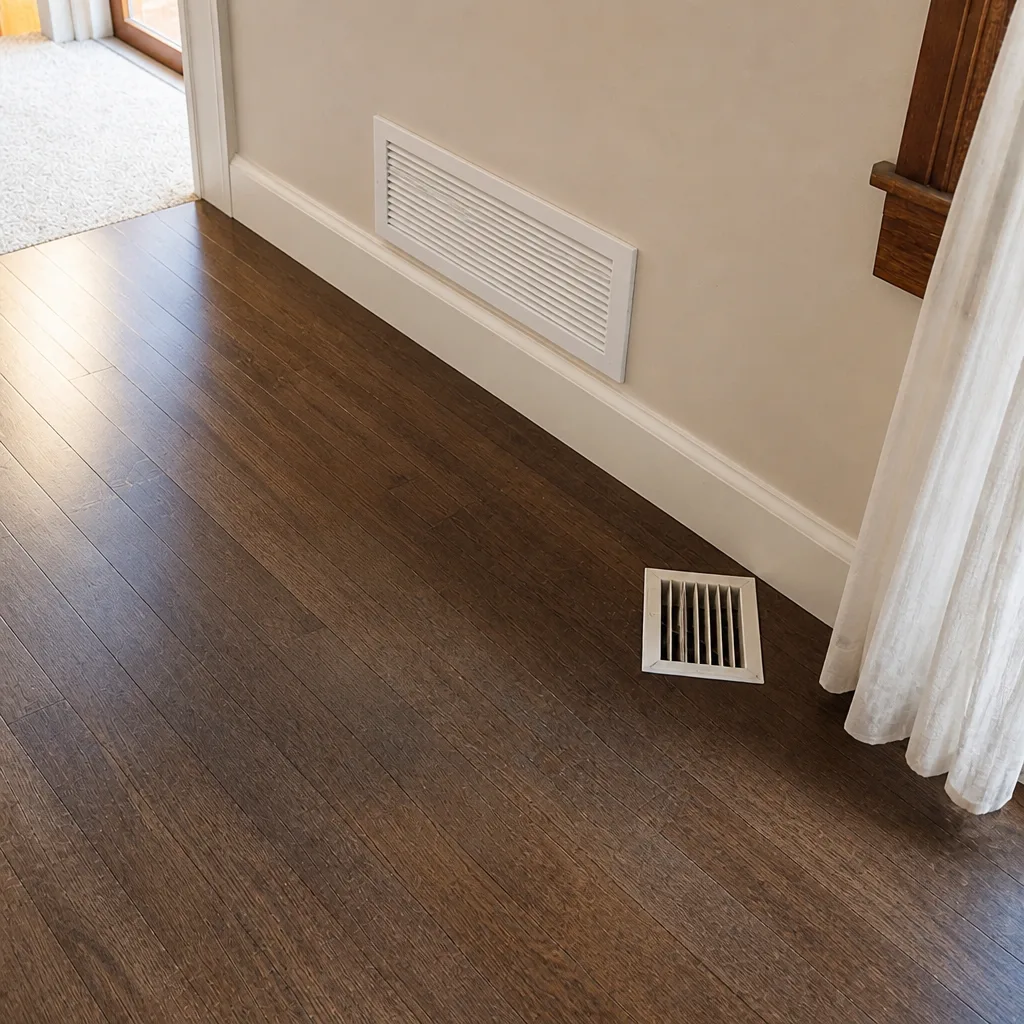
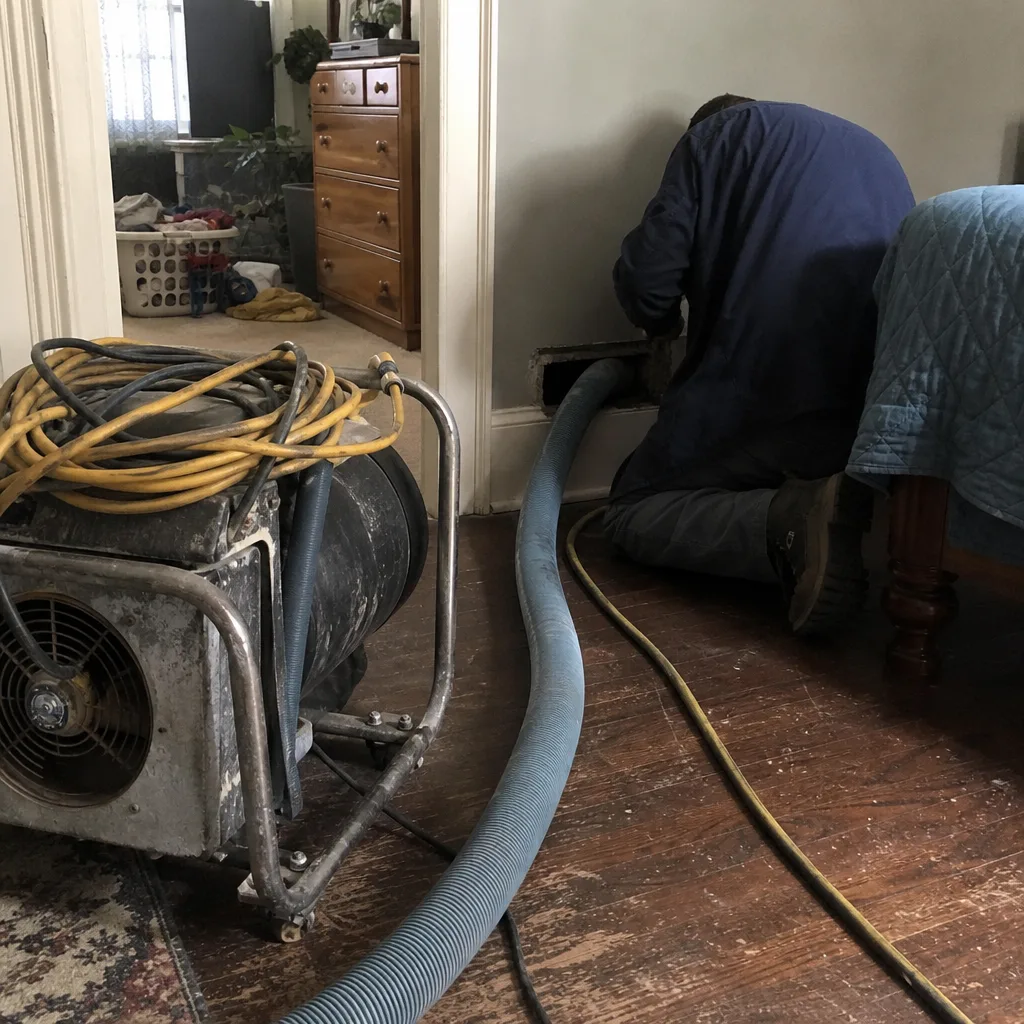
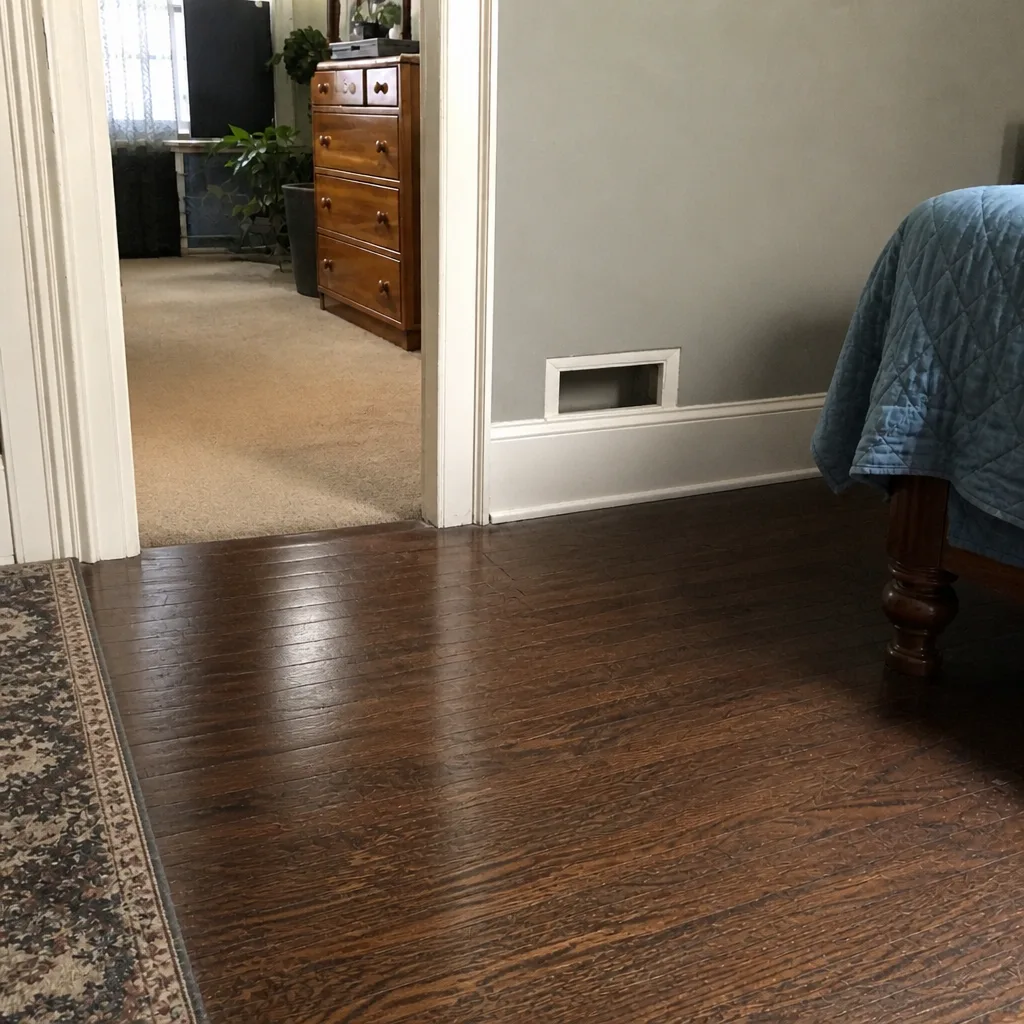
Whole-system duct and dryer vent check with before-and-after photos - you see exactly what came out of your vents
That "$99 whole-house special" is a bait ad - the real number appears once they are in your hallway, or the "clean" is a shop-vac at the register. We photograph the inside of your ducts before and after instead.
Air Duct Cleaning Maintenance Checklist for Mayfair Homeowners
Most homeowners treat duct maintenance as a single task: change the filter, forget the rest. But a filter swap is the oil change of your HVAC system. It keeps the obvious thing fresh while telling you nothing about what’s happening inside the return ducts, at the coil, or behind the registers. A checklist that records filter dates, humidity readings, and room-by-room airflow turns guesswork into a pattern you can actually read. This guide gives Mayfair homeowners that checklist: monthly, quarterly, and annual tasks, how to track airflow with a tissue and a phone timer, and how to use your notes if you ever need to file a warranty claim.
Quick Answer
A duct maintenance checklist for Mayfair homeowners should track four things: filter change dates, indoor humidity readings (aim to stay under 55%), room-by-room airflow observations, and register condition. Review the checklist monthly, do a deeper inspection each season, and schedule professional cleaning when you see repeating patterns of dust, uneven airflow, or humidity creeping above 55% through a winter. A written checklist is more useful than a calendar reminder because it shows trends, not just tasks.
Styles & brands we work with
- Whole-home duct cleaning
- Dryer vent cleaning
- Camera inspection
- Sanitizing & deodorizing
Table of Contents
- Why a Checklist Beats a Calendar Reminder
- Monthly Tasks: What to Check and Record
- Quarterly Tasks: Deeper Inspection Each Season
- Annual Tasks and the Professional Service Visit
- How to Track Airflow Room-by-Room with a Tissue and Timer
- What Humidity Above 55% Does to Duct Liner
- Register and Grille Inspection: Reading Discoloration Patterns
- Using the Checklist as Documentation for Insurance and Warranty Claims
Why a Checklist Beats a Calendar Reminder
Changing your filter every 90 days while ignoring return-duct static pressure is like changing your oil but never checking the air filter. One task masks a bigger problem building underneath. A calendar reminder tells you “it’s been 90 days.” A checklist tells you the filter was dirtier than last time, that the upstairs bedroom vent is blowing weaker than it was three months ago, and that the indoor humidity hit 58% during the coldest week of January. Those observations are what tell you when cleaning is actually necessary rather than just overdue on paper.
Mayfair homes sit in a climate with real seasonal swing: humid summers, dry forced-air winters, and shoulder seasons where the system runs intermittently. That pattern matters because duct problems rarely appear overnight. They develop across a heating season. The homeowner who records humidity and airflow every month sees the development; the homeowner who only remembers the filter sees the symptom six months later.
What we’ve found in our work is that the most useful maintenance record is simple and physical: a clipboard or a notes app with four columns. Date. Filter condition. Humidity reading. Airflow note per room. That’s the whole system. Everything else in this guide builds on it.
A checklist also protects you from the most common trap in this trade: buying cleaning you don’t need because a coupon arrived, or skipping cleaning you do need because the calendar said it’s not time. Patterns beat schedules. The checklist is how you read the patterns.
Monthly Tasks: What to Check and Record
Monthly tasks should take about fifteen minutes. The goal is observation, not repair. You’re building a record, and a record only works if it’s consistent.
- Check the filter. Pull it and hold it up to a light. Note the condition in your log: light dust, moderate, heavy. If it’s heavy after 30 days, you probably have a filtration problem upstream, not a filter problem.
- Record indoor humidity. A cheap hygrometer in the main living area is enough. Write down the reading and the outdoor temperature. Anything sustained above 55% indoors is worth flagging.
- Walk the registers and listen. With the system running, put your hand near each register and note the airflow strength on a simple scale (strong, medium, weak). Listen for whistling or rattling.
- Note any dust streaks on walls or ceilings near registers. A pattern of dust right above a supply register means air is escaping at the boot, not that the room is dusty.
- Check the return grille. Is it visibly loaded with lint or pet hair? Note it. A return that’s blocked is the single most common cause of weak supply airflow, and it rarely shows up on its own.
- Write one sentence about anything unusual. A musty smell. A new noise. A room that used to be fine and now isn’t. That sentence is the most valuable line in your log.
In Mayfair, the monthly log gets especially useful in the first heating month. The change from cooling to heating is when a marginal duct system shows itself: the airflow pattern changes, the humidity drops, and any leaks in the trunk line suddenly matter more because the system is running harder.
Quarterly Tasks: Deeper Inspection Each Season
Four times a year, extend the monthly check into a seasonal inspection. Each season in Mayfair stresses the duct system differently, so the tasks are tailored.
- Early spring: Check exterior dryer vent flapper operation. Confirm it opens and closes freely and isn’t packed with lint. Note the condition in the log.
- Late spring (before cooling season): Clean the return grille and inspect the visible duct surface behind it with a flashlight. Record any dust buildup, moisture staining, or liner separation you can see.
- Early fall (before heating season): Vacuum the return grille and the supply register faces. Re-test airflow room by room. This is your baseline for the heating season, so write it down clearly.
- Mid-winter: Re-check indoor humidity mid-season. If it’s drifting below 30% or climbing above 55% in the same home, that’s a strong signal to look at the system’s humidification and ventilation, not the thermostat.
The seasonal check is the right time to look at anything you’ve noted in the monthly log that repeated three times. Three repeats is a pattern. A pattern is the reason to call for a professional inspection, not a hunch.
If you’re a property manager in Mayfair handling more than one unit, the quarterly inspection is where you build the value. A written quarterly record per unit makes a future maintenance decision defensible and stops the guesswork about which unit actually needs service.
Annual Tasks and the Professional Service Visit
Once a year, do the deep pass. That means the tasks that need actual equipment, and the honest assessment of whether a professional visit is warranted this year.
- Review the whole year’s log. Count the number of times you recorded “weak” or “heavy” for any room or filter. Two or more is the threshold for a professional inspection.
- Inspect the air handler drain pan and the accessible supply plenum. Look for standing water, rust, or debris. Do not open equipment covers yourself; note what you can see and call a professional for anything you can’t.
- Test every register. Recruit a helper, or use your phone timer and a tissue (walkthrough in the next section). Note the relative airflow of every room.
- Check the register and grille faces for staining. Match the pattern to the criteria in the register inspection section below.
- Book the professional visit if the pattern justifies it. Deep cleaning, coil cleaning, and duct repair are not homeowner tasks. The contractor-grade equipment matters for the result and for safety around the HVAC system.
When the professional visit is warranted, our air duct cleaning service uses Rotobrush and Nikro systems to agitate and extract debris rather than blow it loose, and Abatement Technologies negative-air containment to keep dislodged material out of the living space during the job. That’s source-removal cleaning, and it’s the difference between cleaning your ducts and just moving the dust around inside them.
The annual review is also the right time to plan follow-on work. If the ducts are clean but the filtration is weak, that’s when Honeywell or Aprilaire equipment makes sense. Our full Air Duct Cleaning Mayfair service combines cleaning, sealing, and air-quality work in one engagement, so the improvement is planned rather than forced onto a separate call.
How to Track Airflow Room-by-Room with a Tissue and Timer
You don’t need a manometer to know that a room is losing airflow. A tissue and a phone timer will do it, and the method is more repeatable than it sounds if you do the same thing every time.
- Set the system to a fixed fan setting and leave it there for every test. If your system has a fan-on option, use it consistently. This removes the variable of the system cycling mid-test.
- Hold a single-ply tissue about two inches in front of a supply register on the center of the grille face. Don’t press it against the grille; hold it back.
- Start a phone timer. Count the seconds until the tissue is fully horizontal (held 90 degrees) away from the grille. If it never gets horizontal, note “no lift.”
- Record the time per room. Faster to horizontal means stronger airflow. This gives you a comparative number, not an absolute one, which is exactly what you want.
- Repeat in every room in the same order. The comparison only works if the method is identical.
- Repeat at the return after all supplies are recorded. A weak return explains weak supplies, and it’s a very common finding.
What makes this test useful is the trend. A number by itself says nothing. The same number next month says the airflow hasn’t changed. A visibly slower time in one room, with everything else the same, says something has changed in that branch of the system.
In Mayfair, we’ve seen this test pay off most in homes with a long trunk run to a converted attic or a rear addition. Those branches are the first to show duct sag, disconnected joints, or undetected leakage. The tissue test surfaces the change before the room becomes noticeably uncomfortable.
Fix what the test reveals: seal the duct leaks. That’s why our Duct Repair & Sealing service is a native part of our offering. When the tissue test identifies a weak branch, we diagnose and fix it in the same visit rather than referring you out.
What Humidity Above 55% Does to Duct Liner
Duct liner is the insulation that sits on the inside of many duct systems, particularly in older construction and in trunk lines. It’s there to reduce noise and heat loss. It’s also a moisture sponge when indoor humidity stays high.
Above 55% indoor humidity sustained over a single winter heating season, three things tend to happen to lined duct:
- The liner takes on water. Liner facing can absorb vapor from humid air moving through the duct, especially in cool zones like basement trunk runs where the dew point is close to the air temperature.
- Liner facing begins to peel. Once saturated, the facing material loosens from the liner substrate. You’ll see this as a flap or a wrinkle visible behind a register.
- Peeling facing becomes a debris source. Loose liner facing breaks into the airstream and collects at supply boots. It looks like a cleaning problem but it’s a material failure, and the fix is replacement, not another cleaning.
This matters in Mayfair because the shoulder season here is long and switchable: humid weeks and dry furnace-running weeks can alternate. Humidity monitoring is the way to catch it before the liner is compromised.
The observation belongs on the checklist. When humidity is above 55% for more than two consecutive weeks with the system running, note it and plan a professional inspection. Where we’ve seen this addressed properly, the conversation quickly shifts from cleaning to air-quality equipment: a whole-home dehumidifier from Honeywell or Aprilaire, or targeted ventilation, is the intervention that stops further liner damage. Clean ducts are only the start; humidity control is what keeps them clean.
Register and Grille Inspection: Reading Discoloration Patterns
A dusty register face is normal and meaningless. What matters is the pattern around it. Where the dust is tells you more than how much of it there is.
- Even fine dust across the face: surface dust from normal operation. Routine vacuuming handles it. Log it and move on.
- Dust concentrated at the edges of the register or around the frame: air is escaping around the boot, not through the register. This is a duct sealing point, and it usually repeats in every room with the same install detail.
- A dusty streak running up the wall or ceiling from the register: a strong local leak at the boot or a loose duct joint. Log the streak; sealing is the fix.
- Dark staining with a slightly oily look: often indicates return air bypassing the filter and hitting a surface, or dust that’s been burned onto the surface by a heat source. Either is a professional inspection trigger.
- Moisture-related dark staining or peeling paint around the register: likely humid air hitting a cool surface. Humidity is the correct next step to investigate.
- Rust streaks on a metal grille: condensation is forming on the grille. Usually a cool-room symptom, and it’s worth logging against the room’s airflow and humidity history.
In our experience, the streak and edge-dust patterns are the ones homeowners most often misread as “the ducts are dirty.” They’re actually sealing problems. If our inspection finds that, it’s the diagnosis that goes into the job description, not a second cleaning visit. Register inspection is where the checklist saves you from buying the wrong service.
Using the Checklist as Documentation for Insurance and Warranty Claims
The checklist has a second life beyond maintenance. It’s an evidence file. If a warranty question comes up later, a written record with dated observations gives the conversation somewhere to start.
Three situations where the record matters:
- HVAC equipment warranty questions. If the equipment manufacturer asks whether the system was maintained, a dated record of filter changes, airflow observations, and any professional service supports your side of the conversation. We can’t promise a warranty outcome, but a written record is stronger than a memory of one.
- Insurance claims related to water intrusion or air quality. If water has entered the duct system from a leak or a flooded space, dated pre-loss records help establish whether the duct had been maintained. Contractors performing this kind of work use containment equipment during the job for the same reason: it produces a clean, documented service.
- Property manager records. Documented quarterly inspections per unit support decisions about which unit gets service first and why. They also protect the manager if a tenant raises a maintenance concern.
Keep the log simple. Date. Observation. Action taken. It doesn’t need to be polished. What it needs is to exist. A log with six months of entries protects you far better than a log with three years of gaps.
If you do need professional service to close a warranty or insurance question, ask the technician to leave the service record attached to your file. Any professional-grade cleaning should include the pre- and post-service observations, and it’s reasonable to ask for them.
Common Mistakes to Avoid
- Tracking filter changes but not airflow. A fresh filter can hide a duct leak entirely, because the filter compensates by catching what the leak pulls in.
- Buying cleaning on a calendar instead of a pattern. Duct cleaning intervals vary widely. The checklist trend is the better signal than a fixed number of years.
- Ignoring humidity because the AC runs fine. In Mayfair, the shoulder season can be humid while the system barely runs. Silent moisture is what damages duct liner.
- Treating every dusty register as a cleaning trigger. The pattern, not the quantity, is the diagnosis.
- Using a shop-vac on ductwork yourself. Homeowner vacuuming on an HVAC system can pull debris into the coil compartment and make the eventual professional cleaning a bigger job.
- Skipping the return grille entirely. It’s the most common point of restriction and the least inspected.
- Not writing the observation down. A pattern you can’t prove is a hunch. A pattern you logged three times is evidence.
See the difference
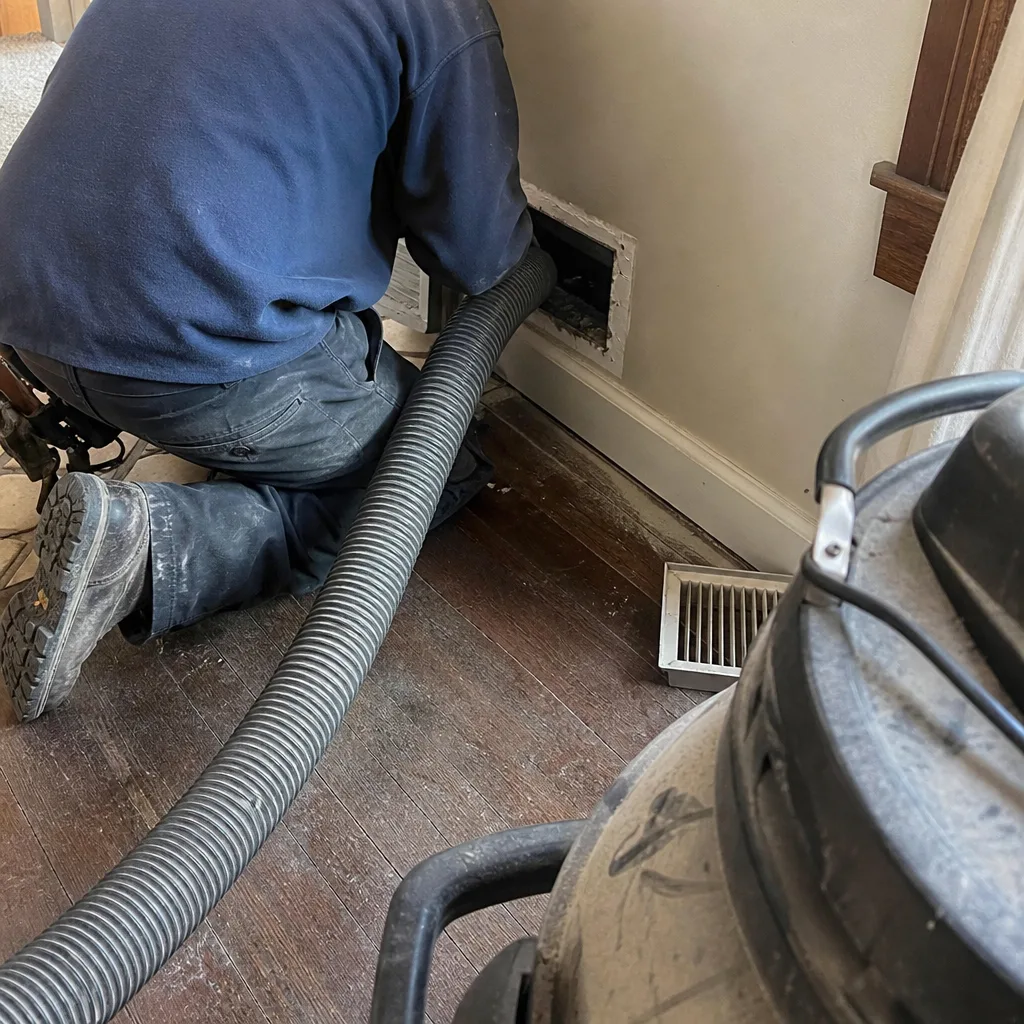 Before
 After
 Before
 After
 Before
 After
When to Call a Professional
Call when the checklist produces a repeating pattern: three or more months of “heavy” filter loading, weak airflow in the same room for two seasons, a register discoloration that matches the leak patterns above, sustained indoor humidity above 55% through a heating season, or any musty smell you can’t trace. Call sooner if you see liner facing peeling behind a register, water stains inside a return, or any visible damage to the ductwork. Duct cleaning, coil cleaning, sealing, and any repair inside the HVAC system are professional work; homeowner diagnosis is fine, homeowner intervention isn’t. Air Duct Cleaning Mayfair offers free estimates in Mayfair. Our technicians have up to 8 years of experience. Call (888) 611-5717 and we’ll walk through the checklist with you.
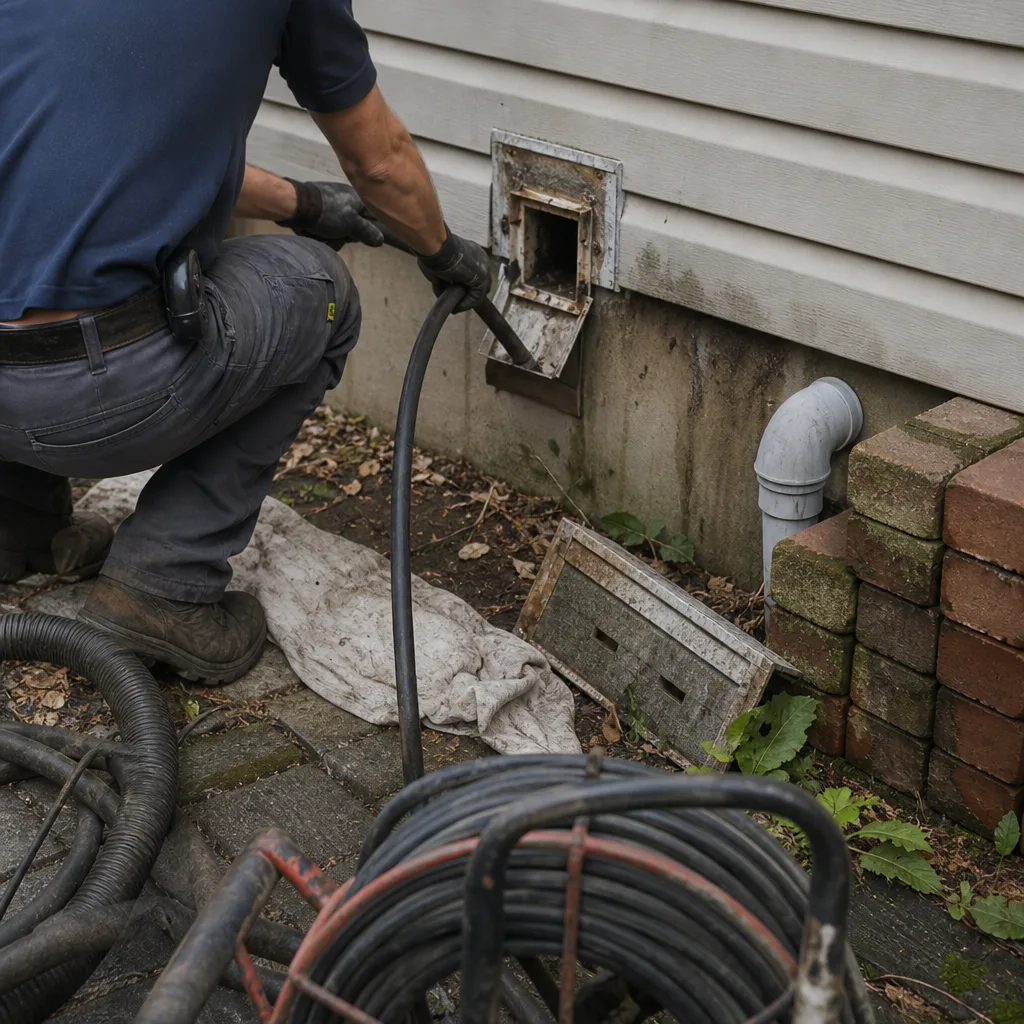
Our HVAC cleaning service addresses the coil and air handler compartment that no homeowner checklist can safely reach. Our dryer vent cleaning service handles the other ventilation line in the house; the checklist should flag it quarterly too, since a clogged dryer vent is a fire concern rather than an airflow concern.
Frequently Asked Questions
There’s no single correct interval, and a calendar alone is the wrong reason. Our recommendation: use the checklist to establish your baseline, then schedule professional cleaning when the recorded pattern shows repeating weak airflow, recurring heavy filter loading, visible liner degradation, or humidity you can’t bring under control. In practice, many Mayfair homes fall into a multi-year interval; homes with older lined duct, pets, or recent renovation may need it sooner. Call (888) 611-5717 for an exact quote. Estimates are free.
Cheap quotes usually reflect a smaller scope: a vacuum pass at the register with no rotary agitation of the duct surface, no coil cleaning, and no containment. The customer-facing result can look similar; the actual result is different. What matters is whether the contractor uses contact cleaning (rotary agitation) inside the duct, not just extraction at the opening. Our Rotobrush and Nikro equipment are specified for that reason. Call (888) 611-5717 to talk through what’s included before you decide. Estimates are free.
Ask for before-and-after photographs of your own duct internals, and a written record of what was cleaned and what condition it was found in. Any professional who can’t provide both is a red flag. When we do the work, before-and-after photos are part of the deliverable, because the checklist habit applies to the contractor too.
No. Filter changes handle incoming air, not the condition inside the duct, the coil, or the return system. The checklist tracks the things a filter can’t: static pressure, airflow, humidity, and liner condition. A freshly changed filter on a leaking duct system is the illusion of maintenance.
The daily and monthly checklist costs nothing beyond a cheap hygrometer and a phone timer. Professional service is priced per job after a written estimate, and our estimates are free. If you’re budgeting the year, plan for professional inspection when the checklist pattern justifies it, rather than on a fixed annual schedule.
We’re closed on Saturdays. We answer 24/7 on the phone, so the call gets booked into the next open slot: fast dispatch from 7am to 7pm, Sunday through Friday. If a checklist observation can wait, that’s the plan; if it feels urgent, call and we’ll book the earliest opening.
The Bottom Line
Duct maintenance is a tracking discipline, not a shopping decision. Record the filter, the humidity, and the airflow. Read the pattern across months. Then decide whether cleaning, sealing, or air-quality equipment is the right next step. That pattern is what tells you when cleaning is actually necessary; the calendar only tells you when something was on the to-do list. In Mayfair, the seasonal swing makes the pattern especially useful because problems develop across a heating season, not on a fixed schedule. Get the checklist habits in place, call us when the pattern points to the next step, and protect the record so it can work for you later.
Call (888) 611-5717. We answer 24/7. Fast dispatch from 7am to 7pm, Sunday through Friday. Estimates are free. One flat price per system is agreed before work starts, before-and-after photos are part of the job, and our technicians have up to 8 years of experience. For property managers or homeowners who want an honest read on their checklist, they can also book directly at our Air Duct Cleaning Mayfair page.
Written by the team at Air Duct Cleaning Mayfair.