
Last updated November 25, 2026
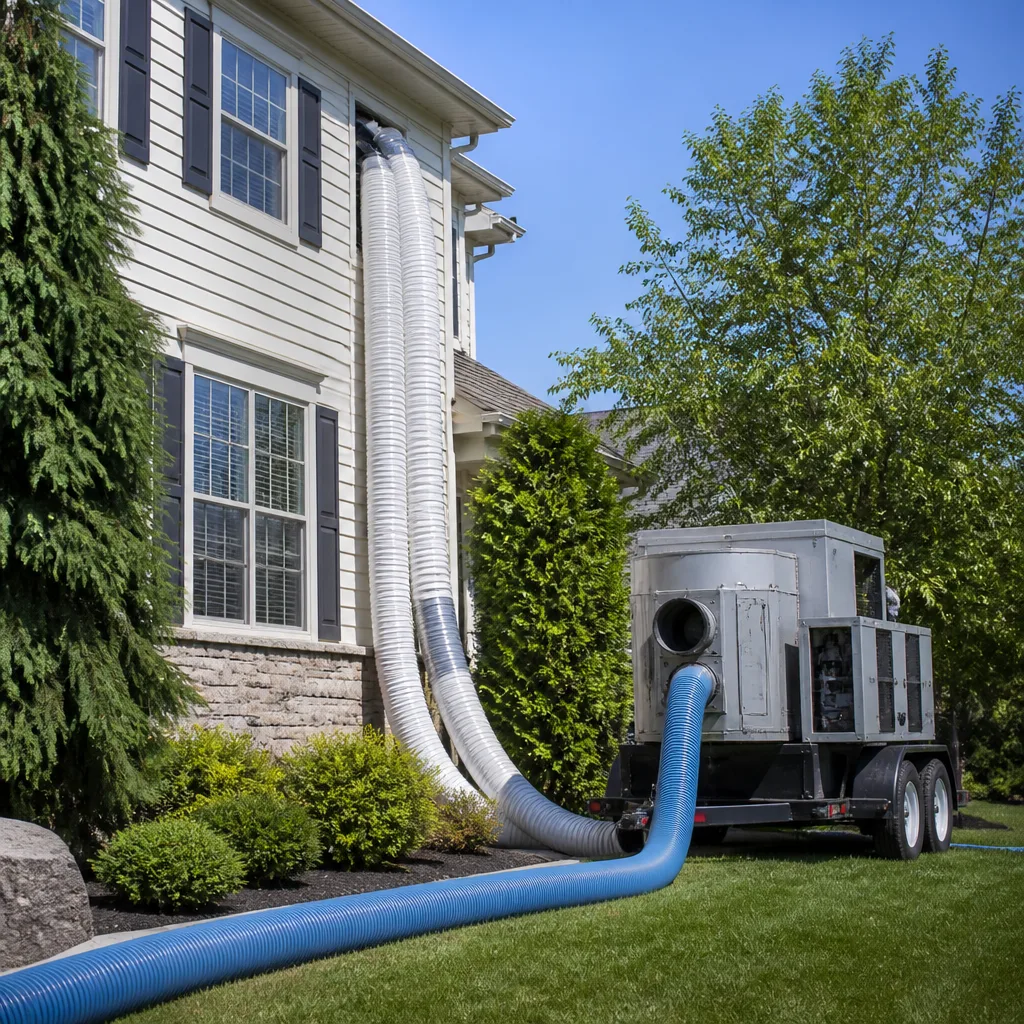 Whole-home duct cleaning
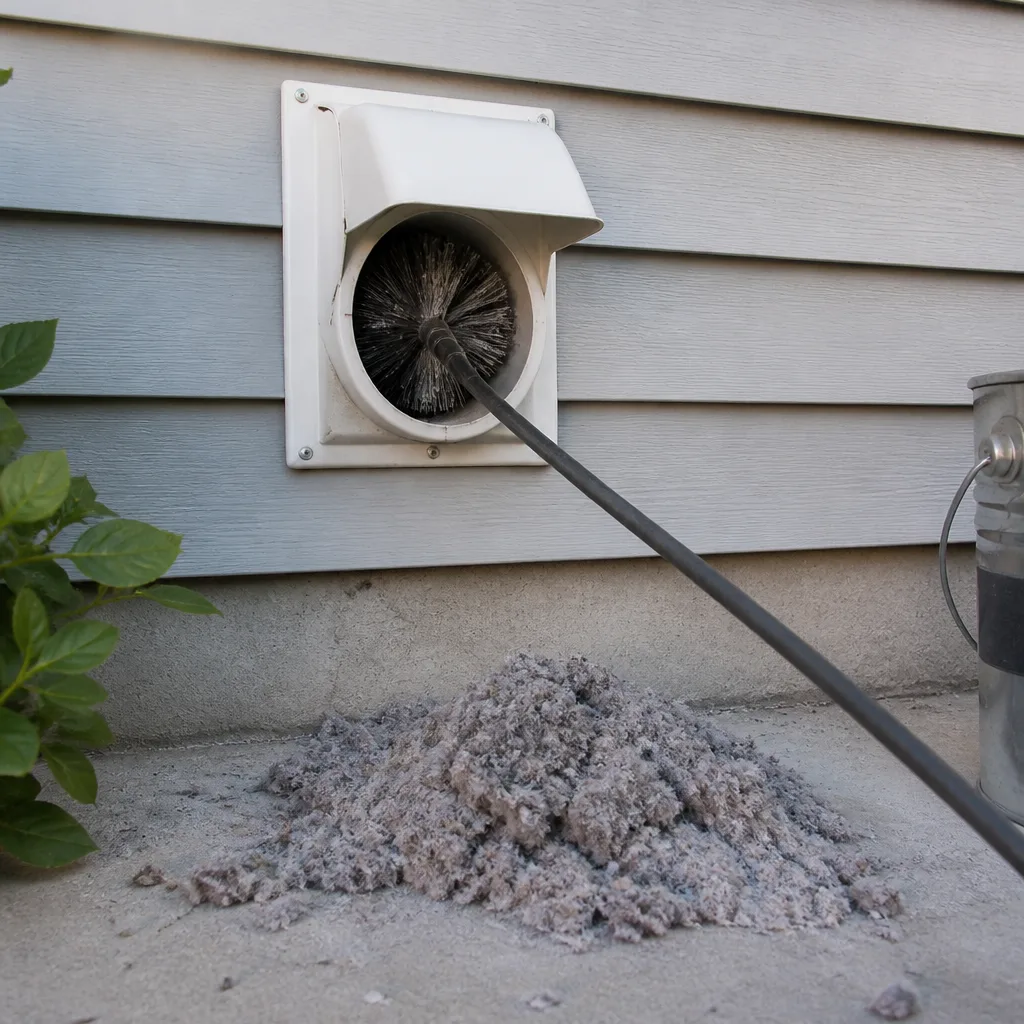 Dryer vent cleaning
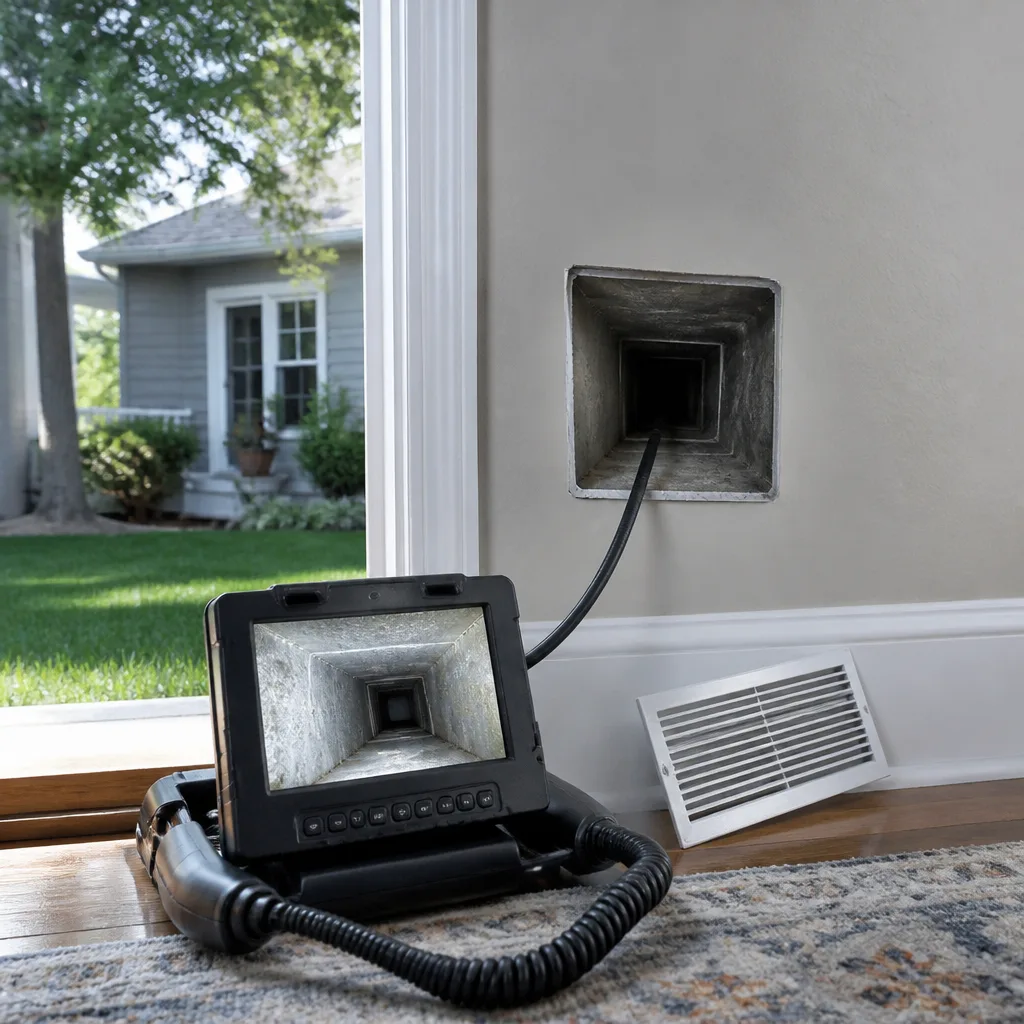 Camera inspection
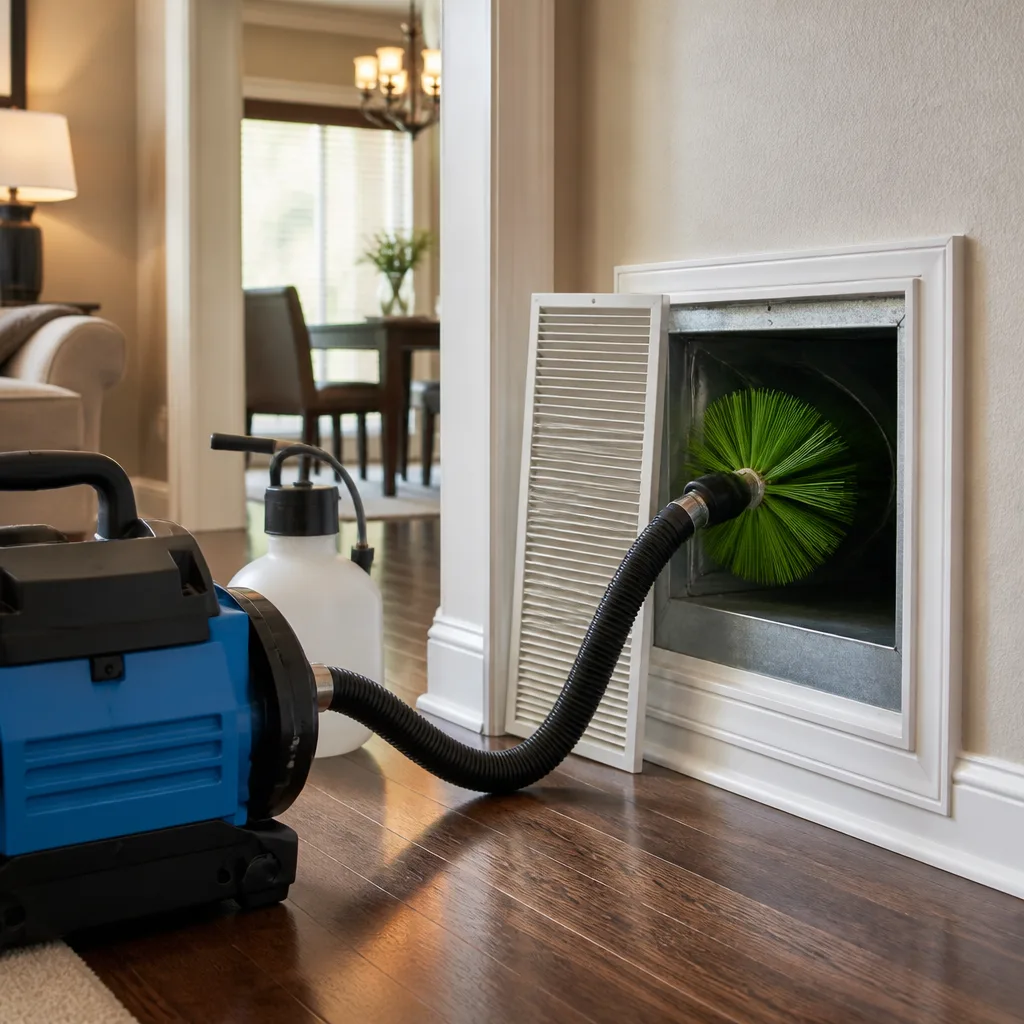 Sanitizing & deodorizing
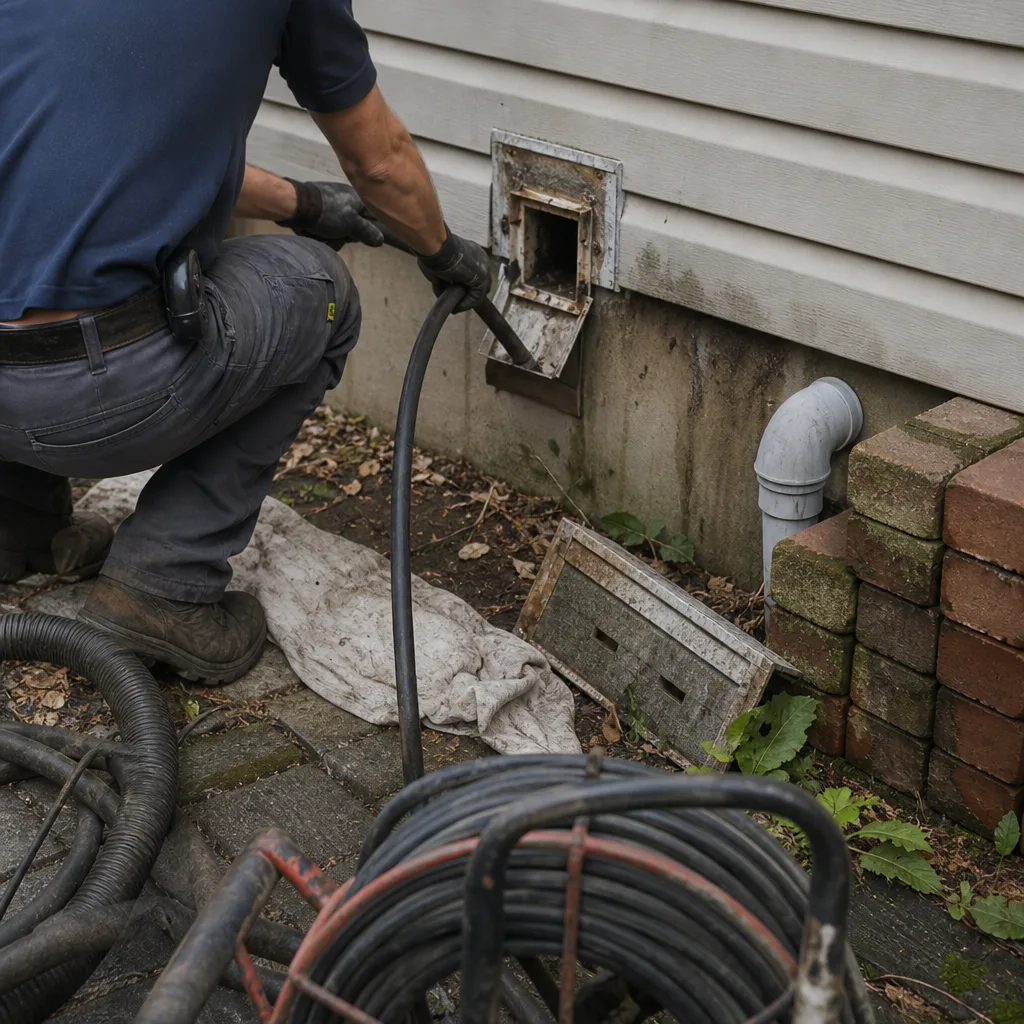
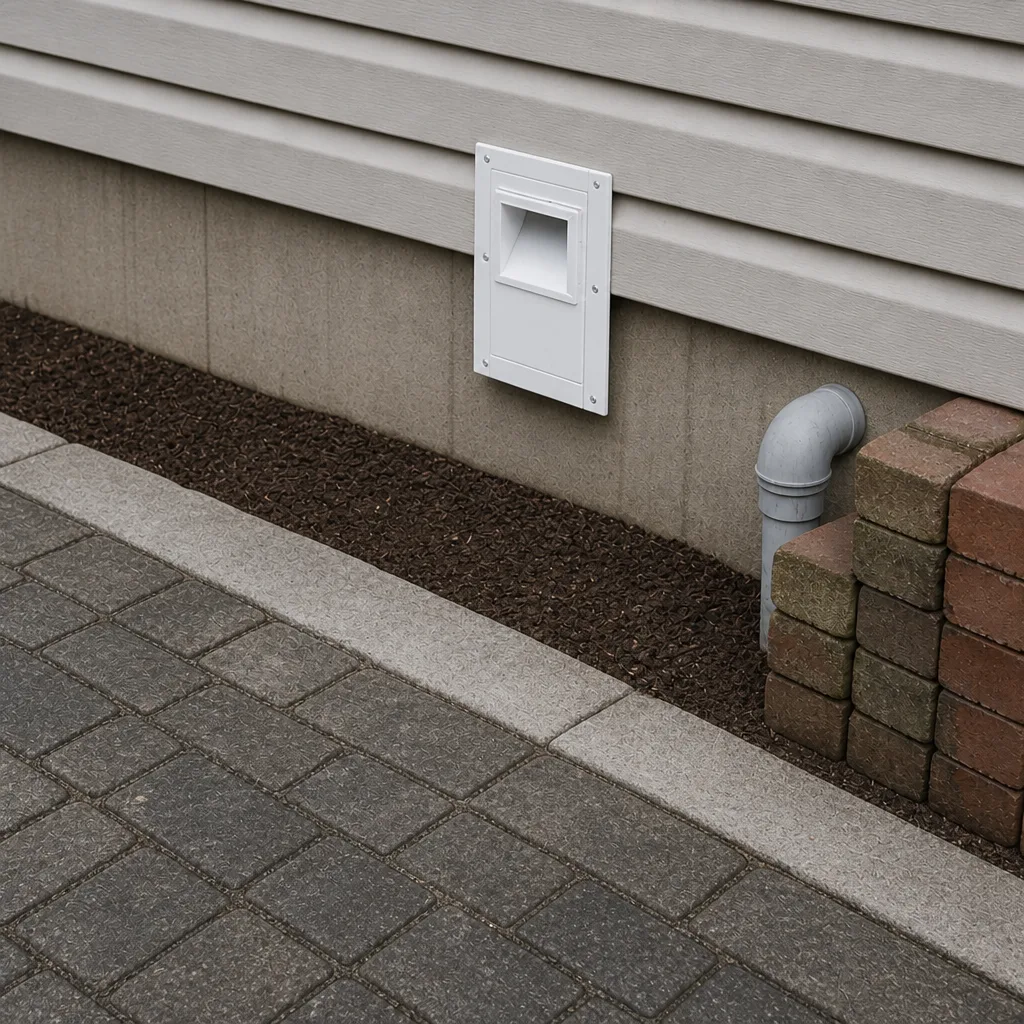
Whole-system duct and dryer vent check with before-and-after photos - you see exactly what came out of your vents
That "$99 whole-house special" is a bait ad - the real number appears once they are in your hallway, or the "clean" is a shop-vac at the register. We photograph the inside of your ducts before and after instead.
Air Duct Cleaning Maintenance Schedule: What to Do and When
Most homeowners in Mayfair have heard the same rule repeated: clean your air ducts every three to five years. It sounds tidy. It’s also wrong often enough to be expensive either way. A Mayfair home with a 1-inch fiberglass filter, two dogs, and a recent kitchen renovation may genuinely need cleaning in 18 months. A house a few blocks away with a 4-inch media filter, no pets, and low dust may legitimately go seven years without a full cleaning. The same blanket advice fails both, and usually in opposite directions. What actually determines your interval is a small set of variables you can measure. This guide lays them out, builds a schedule from them, and explains what maintenance between cleanings looks like so you’re not just scheduling and forgetting.
Quick Answer
There’s no single correct interval for air duct cleaning. A reasonable baseline is every three to five years for a typical home, but the real schedule shifts based on four things: your filter’s efficiency rating, how many people and pets live in the house, how much renovation or construction dust the home has seen, and how many hours a year the HVAC system actually runs. Homes with low filtration, heavy occupancy, or recent renovation often need cleaning closer to every 18 to 24 months, while tight, well-filtered homes can stretch to six or seven years. A professional inspection is what tells you where you sit on that range.
Styles & brands we work with
- Whole-home duct cleaning
- Dryer vent cleaning
- Camera inspection
- Sanitizing & deodorizing
Table of Contents
- The Four Variables That Actually Control Your Duct Cleaning Schedule
- A Tiered Schedule Framework: Baseline, Accelerated, and Post-Event
- What a Technician Actually Inspects Between Cleaning Cycles
- Why Late Summer and Early Fall Are the Right Time for Duct Work in Philadelphia
- Filter Replacement: The Maintenance Step That Resets the Clock
- Renovation Dust and Construction Debris: The Post-Event Rule
- Filtration and Air-Quality Upgrades That Extend Your Interval
- Dryer Vent Cleaning: A Separate Schedule You Shouldn’t Ignore
The Four Variables That Actually Control Your Duct Cleaning Schedule
Duct contamination is a rate, not a state. Debris accumulates at a speed determined by how much particulate load enters the system and how well the system filters it out. Four variables drive that rate, and you can assess each one in your own home without special tools.
Filter MERV Rating
The MERV rating of your filter is the single biggest lever. A 1-inch fiberglass filter captures roughly the coarsest particles, maybe 10 to 20 percent of what passes through. A pleated filter with a MERV rating of 8 to 13 captures far more. A 4-inch media filter with a MERV 11 to 13 rating captures more still and holds that performance across months of runtime instead of choking weeks after installation. If your furnace is running a low-efficiency 1-inch filter, more particulate makes it into the ducts, and the cleaning interval shortens accordingly. The filter is upstream of everything else.
Pets and Occupancy
Pets shed dander and hair that enters the return system as airborne debris. Two dogs with full coats generate a continuous particulate load. Occupancy matters for the same reason: people shed skin cells, generate dust from textiles, and add cooking particulates. A three-person household with pets produces several times the particulate volume of a single retiree living alone with no animals. Neither one is doing anything wrong. They just have different schedules.
Construction and Renovation Dust
Renovation is the most disruptive variable. Drywall sanding, framing dust, flooring removal, and cabinet installation all release enormous volumes of fine particulate into the air, and your HVAC system will pull a good share of it into the return side and push it through the supply trunks. Even with plastic sheeting and negative-air mitigation during construction, some fraction enters the system. A home that hasn’t been cleaned after a renovation is functioning with a full-time debris load, no matter how old the ducts are.
Annual HVAC Runtime Hours
A duct system that runs 4,000 hours a year cycles 10 to 20 times the air volume of a system that runs 1,200 hours. Runtime is largely a function of climate and equipment efficiency. In the Philadelphia area, the combination of humid summers and cold winters means most systems run heavily six or seven months of the year. Older, less efficient equipment runs longer to achieve the same comfort, which accelerates accumulation. When you replace a furnace, pay attention to the old one’s runtime history; it tells you more about duct condition than the calendar date of the last cleaning.
A Tiered Schedule Framework: Baseline, Accelerated, and Post-Event
Trying to remember “clean every N years” is the wrong mental model. Instead, place your home in one of three tiers and let the tier set your schedule. Most homes fall into the baseline tier. Some belong in the accelerated tier. All homes should add the post-event tier as situations arise.
Tier 1: Baseline (Every 4 to 6 Years)
Homes in this tier share a few characteristics: a 4-inch media filter or a pleated filter with a MERV rating of 8 or higher, one or two occupants, no pets or a single short-haired pet, no recent renovation, and a furnace or air handler that hasn’t been replaced in the last few years. In this tier, running a professional cleaning every four to six years is a sensible baseline. Pair it with an inspection every 18 months so you can catch coil fouling or seal failures before they become bigger problems.
Tier 2: Accelerated (Every 18 to 30 Months)
The accelerated tier catches homes with heavier particulate loads or weaker filtration. Typical markers include a 1-inch fiberglass filter, two or more pets, three or more occupants, a home next to a busy road or in an area with a lot of local construction, or a system that runs almost continuously during heating and cooling seasons. In Mayfair, homes near Roosevelt Boulevard see intermittent heavy traffic particulate, and older rowhouses with forced-air retrofit systems tend to pull from basements or crawl spaces that carry more ambient dust. Accelerated cleaning protects the coil and blower from fouling. We recommend an air duct cleaning at the 18-to-30-month mark, and an inspection halfway between.
Tier 3: Post-Event
This tier isn’t a schedule. It’s a set of events that reset the clock regardless of your calendar:
- Any renovation that generated drywall dust, framing dust, or flooring removal.
- A furnace replacement, coil replacement, or any major HVAC system work.
- Flooding or water intrusion that reached ducts or registers.
- Pest activity inside ductwork, including rodent or insect evidence.
- Visible mold growth inside duct interiors or at register surfaces.
- A move-in to a previously occupied home with an unknown cleaning history.
For any of these, schedule a professional cleaning before resuming the regular tier schedule. A post-event cleaning doesn’t reset you to the beginning of the cycle; it sets you back on the right tier for your home’s actual conditions.
What a Technician Actually Inspects Between Cleaning Cycles
Duct maintenance isn’t just “schedule a cleaning and forget it for a few years.” The between-cycle inspections are where you avoid the expensive surprises. Here’s what a comprehensive inspection covers.
Coil Condition
The evaporator coil sits in the air handler plenum and works like a filter you can’t replace. As air passes across it, dust accumulates on the fins, reducing heat-transfer efficiency and sometimes growing biological matter. A fouled coil can cost 10 to 30 percent of a system’s rated efficiency. Inspection means removing the access panel and visually checking the coil face for debris buildup and any sign of microbial growth. If it’s fouled, source-removal cleaning restores efficiency. The Nikro equipment we use handles coil and air-handler cleaning as a distinct task from duct cleaning, because they aren’t the same job.
Filter Bypass Gaps
A filter only works if all the air goes through it. The most common filter failure isn’t a dirty filter; it’s a bypass gap around the filter frame where unfiltered air slips past. The frame, filter slot, and any gasketing around the filter cabinet should close the gap. If your filter slides in loosely or you can see light around the edges, that air is going straight to the coil and the ducts. Fixing bypass gaps is often a matter of a foam gasket or a piece of aluminum tape. It’s a cheap repair with a very large effect on interval length.
Duct Joint Integrity
Leaky duct joints let conditioned air escape into the attic or basement and pull unconditioned air from those spaces into the system. A system with 10 percent leakage also pulls dust from wherever the leak is located. Inspecting joints in accessible areas (basement trunks, attic runs, plenum connections) catches gaps before they become gaps that pull in insulation fibers or crawl-space debris. When we find leaks, we repair and seal them as part of the same visit. A crew that only cleans will refer you elsewhere, adding time and coordination. One call covering inspection, cleaning, and sealing saves that step.
Return-Side Contamination
The return system usually has no filter after the main filter cabinet, so any debris that makes it past the filter deposits in the return trunks and can be re-entrained. Inspecting return interiors during cleaning tells you whether the problem originates on the supply side or upstream of the air handler.
Why Late Summer and Early Fall Are the Right Time for Duct Work in Philadelphia
Timing duct cleaning around the seasons isn’t arbitrary. In the Philadelphia area there’s a straightforward mechanical reason to prefer late summer and early fall over spring. Two factors push the recommendation.
Cooling Season Ends, Heating Begins
Duct cleaning is far more effective when the air handler isn’t fighting active cooling calls. During a hot July, the coil is wet from condensation, and the system is running constantly, so any dislodged particulate gets recirculated right back into the supply. In late August or September, cooling demand drops, the coil dries out, and the system rests. Cleaning in that window means the ducts are clean when heating season begins and warm air starts pushing through every register again. You don’t re-contaminate a freshly cleaned system with a coil that’s been pulling allergens through all summer.
Pollen and Allergen Loads Peak in Spring
Spring cleaning sounds sensible, but it misses the point. Pollen loads in this region peak from April into early June. If you clean in March, the ducts haven’t collected the season’s pollen yet; the pollen arrives in the following weeks. Cleaning in late summer or early fall means you capture the accumulated spring and summer particulate and start heating season with a clean system. For anyone in Mayfair with seasonal allergies, late summer is the mechanically superior window for the same reason grass seed isn’t laid in July.
Duct sealing work also benefits from this timing. Air seals and mastic applied in cool, dry weather cure properly and hold through the season changes. Summer’s heat and humidity make the work slower and the seals less reliable.
Filter Replacement: The Maintenance Step That Resets the Clock
Filter neglect is the most common reason a home lands in the accelerated tier. Changing the filter on schedule is the single cheapest maintenance action you can take, and it directly protects the cleaning interval you’re trying to extend.
Replacement Intervals by Filter Type
- 1-inch fiberglass or basic pleated filter: every 30 to 60 days during heating and cooling seasons. These choke quickly, and once they’re full, particulate bypasses them and heads for the coil and ducts.
- 1-inch pleated with MERV 8 to 11: every 60 to 90 days. Higher MERV filters load faster because they’re catching more.
- 4-inch media filter with MERV 11 to 13: every 6 to 12 months. Longer lasting because the depth diffuses the load, but they still need replacement on schedule.
- High-MERV 5-inch media cabinets: every 12 months under typical residential load.
Why the Filter Is Upstream of the Whole Schedule
A clogged filter does two things. It reduces airflow, which raises static pressure and can cause the blower to run hotter and the coil to freeze. And it stops filtering, which means all the particulate the filter was capturing starts moving downstream into the ducts. A filter that should have been changed three months ago effectively dragged your home into the accelerated tier without any other change. On the next inspection, the technician will often find a filter bypass or a fouled coil and ask, accurately, “When did you last change the filter?” The answer usually explains the whole picture.
How Filter Upgrades Change Your Schedule
If you move from a 1-inch fiberglass filter to a 4-inch media cabinet running Honeywell or Aprilaire media, your effective filtration improves significantly and your cleaning interval can stretch. We install both brands as a natural follow-on to a cleaning. Once your ducts are clean, upgrading filtration is the smartest way to keep them clean. The two steps aren’t separate products; they’re a single maintenance strategy.
Renovation Dust and Construction Debris: The Post-Event Rule
Construction dust is the number one cause of premature duct contamination we see in Mayfair. Renovation dust isn’t like household dust; it’s fine, sharp, and produced in volume. Drywall sanding alone releases enormous quantities of gypsum particulate. Framing and demolition release sawdust and old insulation fibers. Flooring removal stirs up decades of accumulated particulate from below the surface.
What to Do Before Construction Begins
- Seal registers. Temporarily cover every supply and return register in the affected zone with painter’s tape and plastic film. This is the single most effective step for preventing duct contamination.
- Run the HVAC on low-return. If possible, minimize the return-side draw from the work zone by closing doors and running window fans for cross-ventilation.
- Ask the contractor about negative-air containment. For heavy-dust work like drywall sanding, professional containment with negative-air equipment is worth asking about.
- Plan a post-construction cleaning. Budget for a professional duct cleaning in the post-construction scope. It’s cheaper than discovering years later that your coil is loaded with drywall dust.
How We Handle Post-Renovation Cleaning
A post-renovation duct cleaning requires more than a vacuum. Drywall dust deposits on the coil and blower wheel, and standard vacuuming at the registers doesn’t touch those. We use Rotobrush contact cleaning on the ducts and Nikro equipment on the air handler and coil to remove the actual source. During the work, Abatement Technologies negative-air containment keeps loose dust from recirculating through the house. The combination is what makes post-renovation cleaning different from a routine maintenance visit, and why we treat renovation dust as its own category.
Filtration and Air-Quality Upgrades That Extend Your Interval
Cleaning a duct system without addressing filtration is an incomplete job. If the reason the ducts got dirty is still present after the cleaning, the dirt comes back faster. The right upgrade does two things: it filters incoming particulate better, and it improves the conditions inside the system.
What We Install
We install Honeywell and Aprilaire air-quality products as part of the same service call as the cleaning. That covers media filtration cabinets, whole-home purification elements, and humidification and dehumidification controls. After a cleaning, moving to a 4-inch media cabinet with MERV 11 to 13 filtration is the most common upgrade. It improves particulate capture without the airflow restriction that a 1-inch high-MERV filter imposes. For homes with a heavily loaded coil or a history of biological growth, whole-home purification products address airborne microbes alongside mechanical filtration.
Sanitizing and Surface Protection
Where an inspection reveals microbial contamination, we apply a sanitizing treatment to affected duct surfaces as part of the cleaning. The finishing step includes Guardsman-grade surface protection on accessible surfaces to slow future deposition. Sanitizing isn’t a substitute for source removal; if the coil is fouled, it gets cleaned properly, then sanitized. Clean surfaces stay clean longer.
Duct Repair and Sealing as a Scheduling Strategy
Leaky ducts are a scheduling problem disguised as an efficiency problem. When supply ducts leak into the attic or basement, they pull dusty air back into the system. Sealing the leaks adds maybe a half-day to the visit and cuts the particulate load substantially. Duct repair and sealing is a native part of what we do, not a referral. A cleaning that finds and fixes leaks is a cleaning that stays effective. Competitors who only clean will hand you a business card for a sheet-metal contractor; we handle it in the same engagement.
Dryer Vent Cleaning: A Separate Schedule You Shouldn’t Ignore
The dryer vent is ductwork too, but it follows its own maintenance logic. Lint accumulation in a dryer vent is a fire hazard, and the schedule depends on volume of use rather than on the HVAC variables above. A household running several dryer loads a week should have the vent inspected and cleaned annually. A household with a shorter dryer duct run and fewer loads can go longer, but never indefinitely.
What to Watch Between Cleanings
- Clothes taking noticeably longer to dry on the same setting.
- The exterior vent flap opening weakly or not at all.
- The top of the dryer feeling hotter than usual after a cycle.
- Visible lint around the lint trap housing or behind the dryer.
- Any lint accumulation at the exterior vent cap.
We schedule dryer vent cleaning alongside HVAC work during the same visit when the schedule allows. The equipment is the same class of professional cleaning gear, and homeowners appreciate not needing to book a separate appointment for what is functionally the same service.
Common Mistakes to Avoid
- Following the “every three years” rule blindly. A homeowner in a tight, well-filtered house who cleans every three years may be paying twice as often as needed, while a pet household with a 1-inch filter going the same interval is overdue. Match the schedule to the conditions.
- Skipping filter changes during the busy season. A filter that should have been changed in July is functionally a bypass for two months. That’s enough to shorten the interval between cleanings by a year or more, and enough time for the coil to start fouling.
- Ignoring filter bypass gaps. A filter frame with visible gaps around the edges defeats the purpose of the filter. It’s a minor repair that halves the effectiveness of even an aggressive filtration setup.
- Cleaning ducts after renovation without cleaning the coil. Drywall dust coats the coil face just as it coats the ducts. Cleaning only the ducts leaves the source, and the ducts re-foul quickly from the coil.
- Choosing a cleaner for the coupon price instead of the process. A cheap cleaning with a shop-vac on the registers won’t touch the coil or the return trunks. The particulate stays exactly where it was, sometimes loosened just enough to be re-entrained more readily.
- Washing ducts or sprays without source removal. Sanitizing sprays applied over a fouled system are cosmetic. The source has to be removed mechanically first, then sanitized. Order matters.
- Putting off duct sealing because the cleaning quote looked better. Leaky ducts pull dust back in from wherever the leak is. Cleaning without sealing shortens the interval before the next cleaning and wastes the seal opportunity.
See the difference
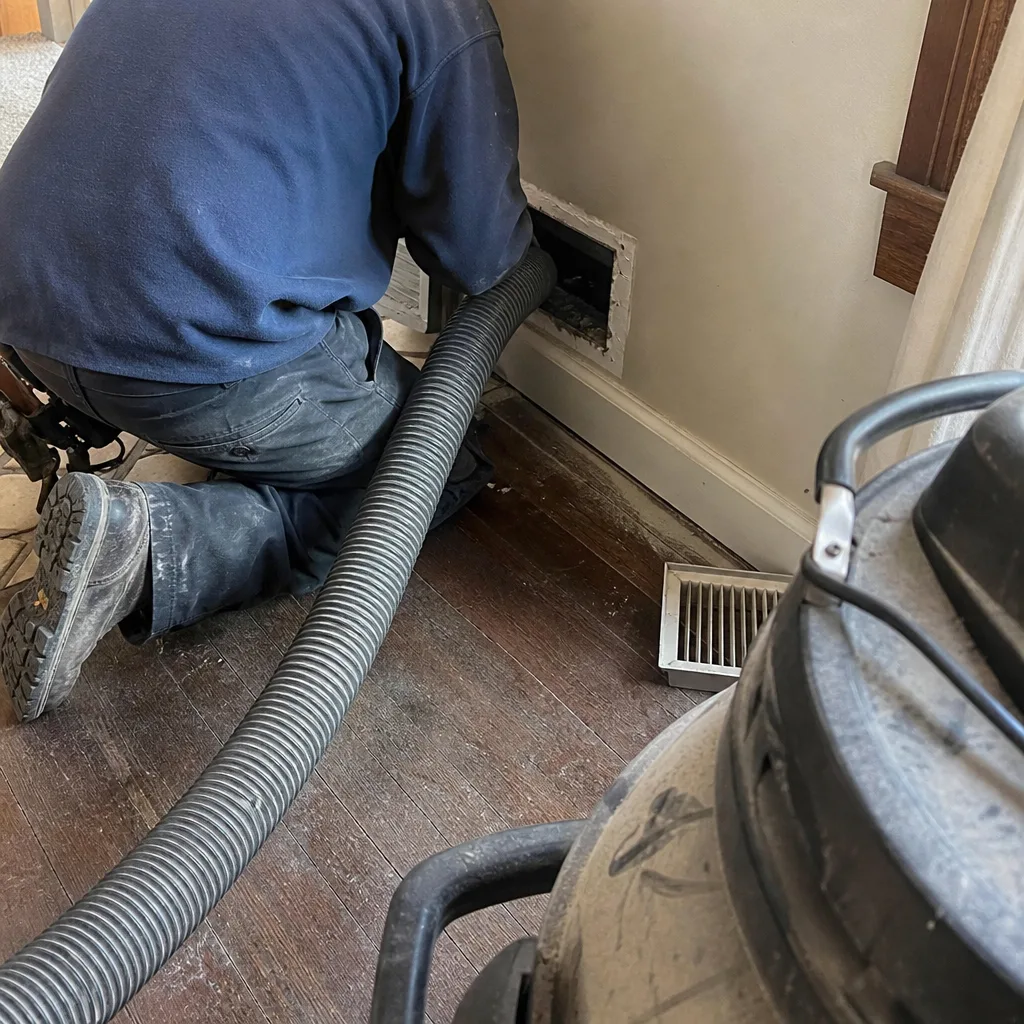 Before
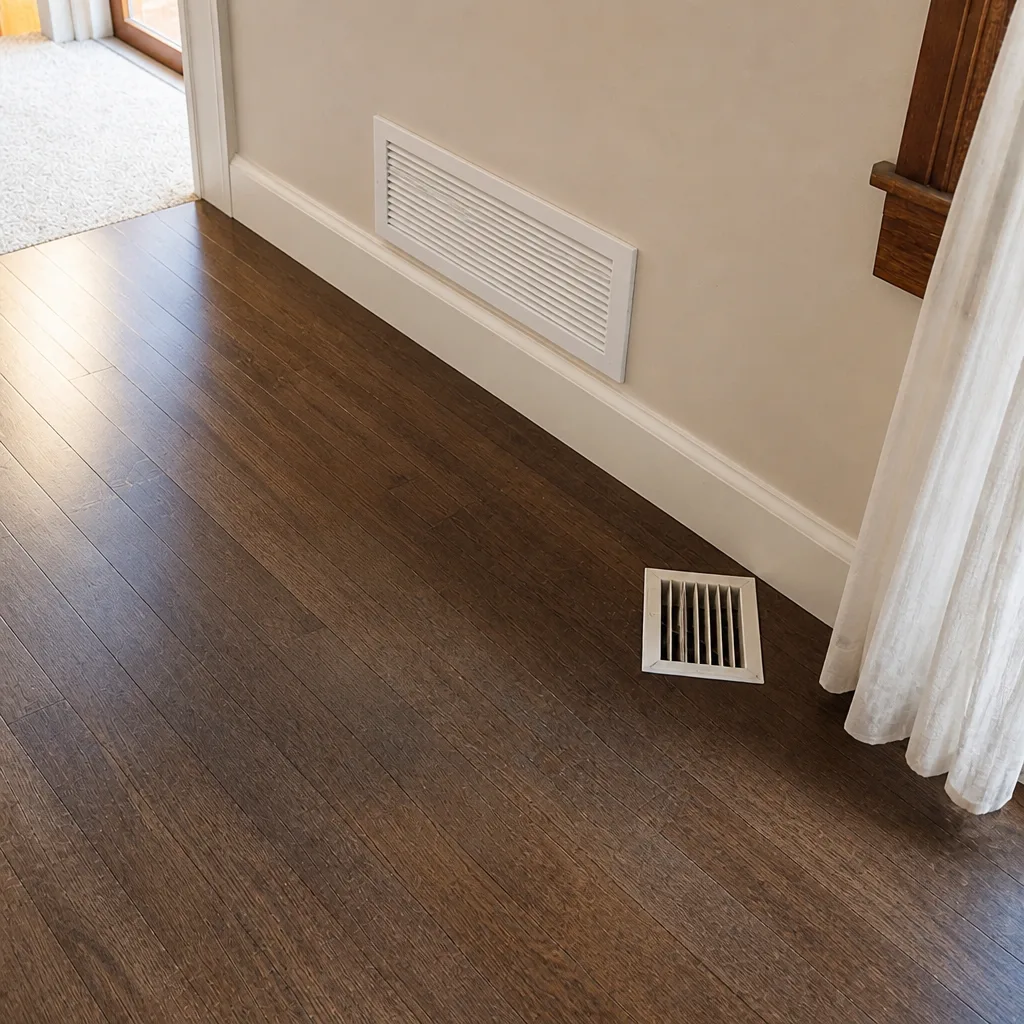 After
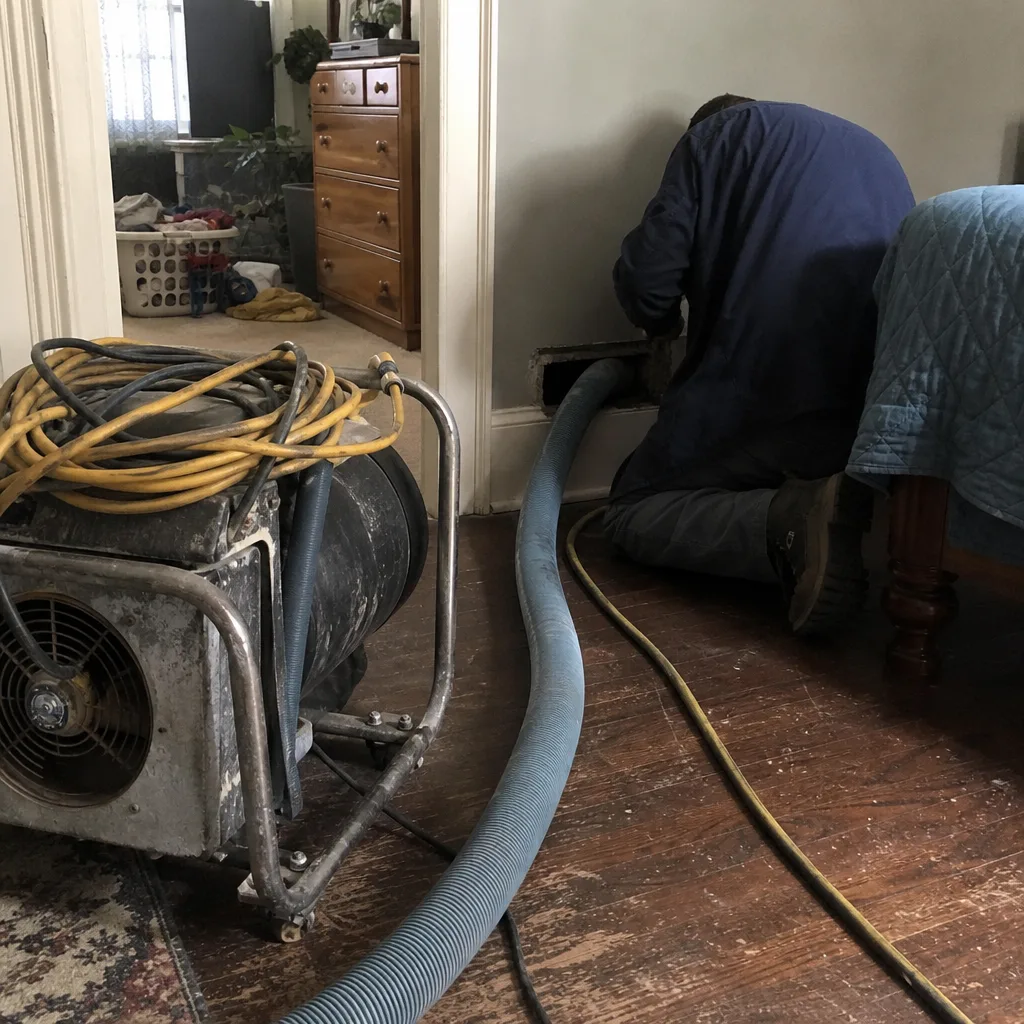 Before
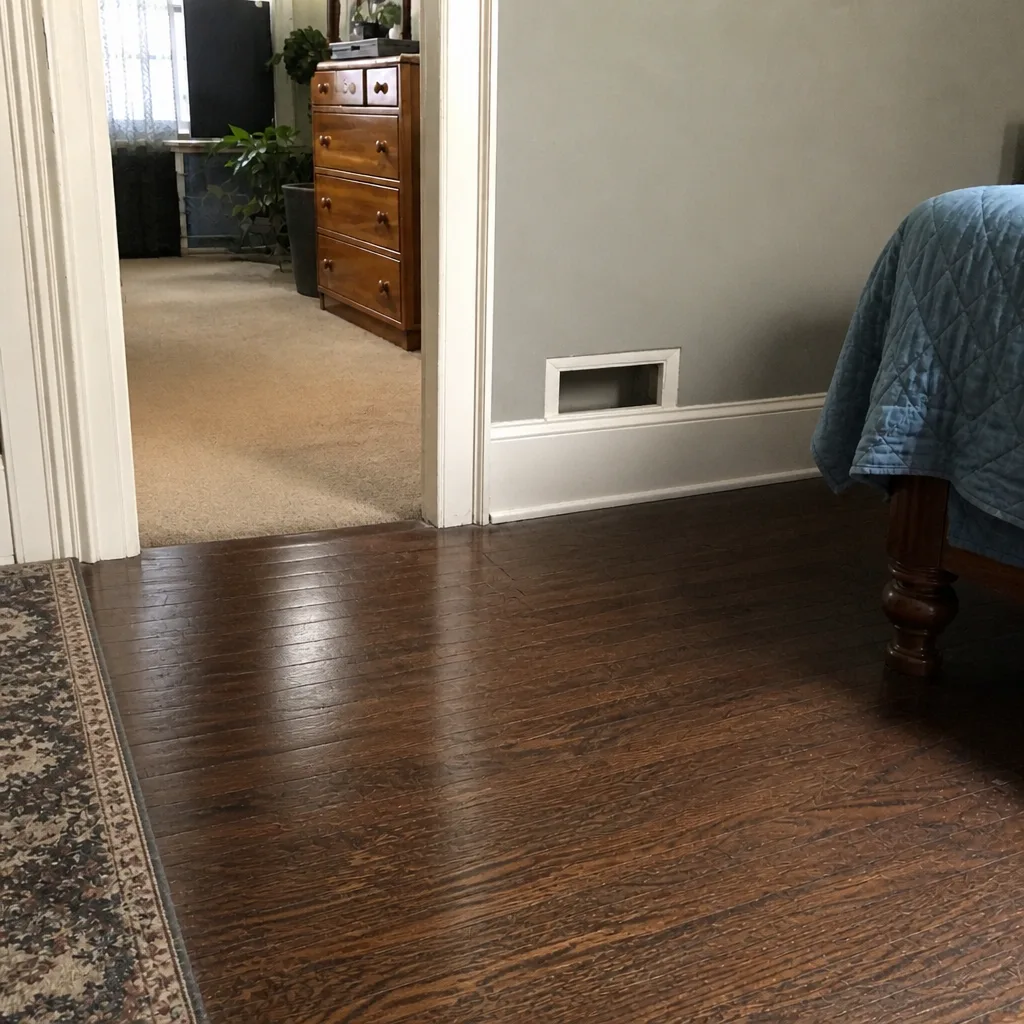 After
 Before
 After
When to Call a Professional
Some signs call for a scheduled cleaning, and some call for a phone call today. Call us if you’re seeing visible dust puffs from registers when the system starts, if there’s visible mold or microbial growth on register surfaces or in the ducts, if you smell stale or musty air when the HVAC runs, or if a pest infestation has left droppings or nests in the ductwork. Call after any renovation that generated substantial drywall or framing dust, after a furnace or coil replacement, after any water intrusion that reached duct or register surfaces, and after a move-in to a previously occupied home with an unknown cleaning history. And call if you’re seeing increased allergy symptoms indoors that correlate with system runtime. Between-cycle inspection is a routine request, not a red flag. Air Duct Cleaning Mayfair offers free estimates in Mayfair. Call (888) 611-5717. We answer 24/7. Fast dispatch from 7am to 7pm, Sunday through Friday.
Frequently Asked Questions
Every three to five years is a reasonable baseline for a typical home, but the correct interval depends on four variables: your filter’s MERV rating, household pets and occupancy, recent renovation activity, and annual HVAC runtime hours. Homes with low-efficiency 1-inch filters, multiple pets, or recent renovations often need cleaning in 18 to 30 months, while well-filtered homes with no pets can go six or seven years. The honest answer is that the interval is a measurement, not a rule, and an inspection sets it correctly for your house.
A routine cleaning maintains a system that’s been kept up. A post-renovation cleaning addresses active contamination from drywall dust, framing debris, and construction particulate that has entered the return side and the air handler. Post-renovation work typically requires air-handler and coil cleaning alongside the duct work, which is why we use Nikro equipment on the coil and Rotobrush contact cleaning on the ducts. If you’ve had a renovation and can’t remember when the ducts were last cleaned, schedule a cleaning and don’t wait for the regular tier schedule to come around.
Yes, and substantially. A filter that’s changed on schedule keeps the coil clean and keeps particulate in the air handler rather than downstream in the supply trunks. When a filter goes unchanged past its rated interval, it stops capturing particulate and effectively bypasses, which sends the load downstream and shortens the interval between cleanings. In our experience, filter neglect is the single most common reason a home is overdue by the time we inspect it. Change the filter before it stops working, not after.
Late summer or early fall is mechanically preferable. Cleaning during active cooling season means a wet coil and a system running constantly, which can re-entrain dislodged particulate. Cleaning in late August or September catches the accumulated spring and summer particulate and starts heating season with a clean system. Spring cleaning sounds intuitive but misses the pollen window, which peaks in this region from April into June. Late summer is the window that pairs the cleanup with the season where the system will rest briefly before heating calls resume.
Between-cycle inspection should cover the evaporator coil face, any filter bypass gaps around the filter frame, duct joint integrity in accessible areas like basement trunks and attic runs, and the return-side interior for debris deposits. A useful inspection also checks the blower wheel for dust loading and the cabinet for microbial growth. The purpose is to find issues while they’re small, which is the point of scheduling an inspection rather than just waiting for the next cleaning year.
Sealing reduces infiltration of unfiltered air from unconditioned spaces, which cuts the particulate load entering the system. That means duct sealing can move a home from the accelerated tier into the baseline tier over time, and it protects the cleaning result for longer. We treat duct repair and sealing as part of the same visit as cleaning so the two work together instead of as separate services. If a cleaning reveals leaks in accessible trunks, sealing is the natural next step in the same engagement.
Do I need a HVAC cleaning at the same interval as duct cleaning?
HVAC cleaning (the coil, blower wheel, drain pan, and air handler cabinet) should happen on the same schedule as duct cleaning, and always after any renovation or equipment replacement. Duct cleaning without HVAC cleaning leaves the coil as a particulate reservoir that re-fouls the ducts. In our work, the two are done in one visit because they’re interdependent. A clean air-handler combined with clean ducts is what changes the system’s operating condition; cleaning only one of them doesn’t.
Dryer vent cleaning follows its own schedule: annually for households running several loads a week, longer for lighter use but never indefinitely. Lint accumulation in a dryer vent is a fire hazard, and the signs are usually clear before a problem emerges. Longer drying times, a weakly opening exterior vent flap, or visible lint behind the dryer all point to a vent that needs attention. Schedule air duct cleaning and dryer vent cleaning together on the same service visit when it makes sense. Call (888) 611-5717 for an estimate; estimates are free, and the price is set per job by the written estimate before any work starts.
The Bottom Line
The best cleaning schedule is one built on your home’s specific conditions, not a fixed number of years. Track four variables: filter efficiency, pets and occupancy, renovation dust, and HVAC runtime. Set your tier from that reading and add post-event cleanings after renovations, system replacements, or water damage. Keep the filter on schedule, and treat filter bypass and duct leaks as repair items rather than scheduling trivia. Late summer is the ideal window for duct work in the Philadelphia area. Between cleanings, inspection of the coil, filter frame, and joint integrity is what keeps small issues small. When you’re ready to set your home’s schedule, call our team. We handle the full range of cleaning, sealing, and air-quality work in one visit with professional-grade equipment, from Rotobrush and Nikro to Honeywell and Aprilaire products. The price is set per job before work starts, and before-and-after photos of your own ducts are part of the work. Call (888) 611-5717 for a free estimate. We answer 24/7. Fast dispatch from 7am to 7pm, Sunday through Friday.
Written by the team at Air Duct Cleaning Mayfair.