
Last updated November 25, 2026
 Whole-home duct cleaning
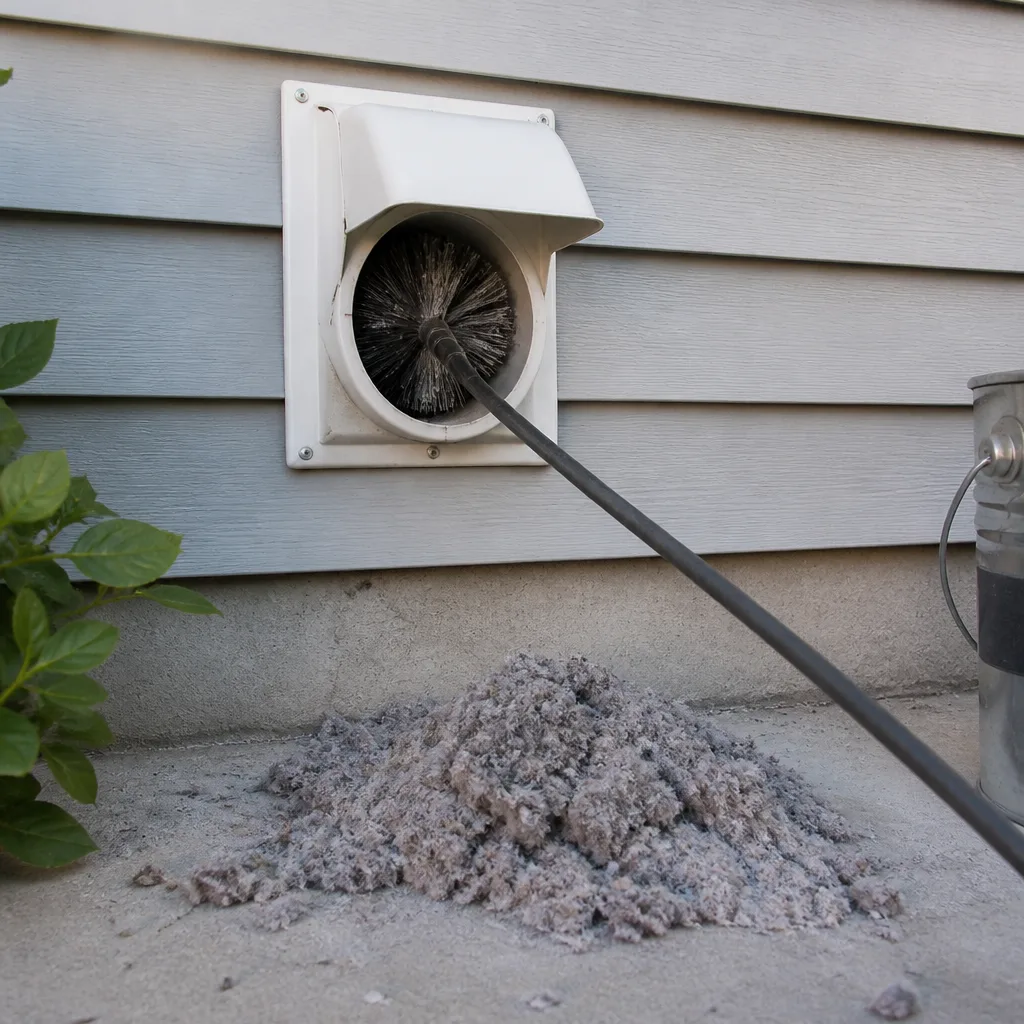 Dryer vent cleaning
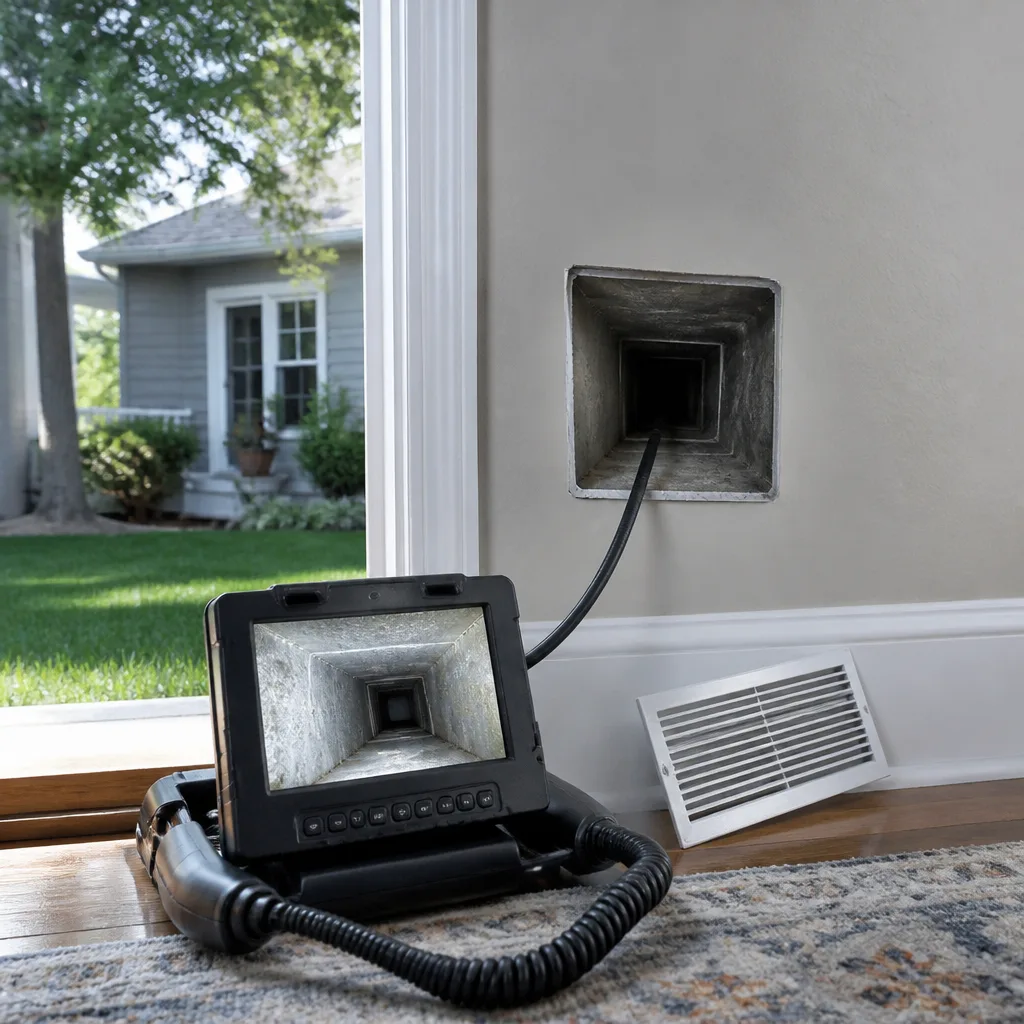 Camera inspection
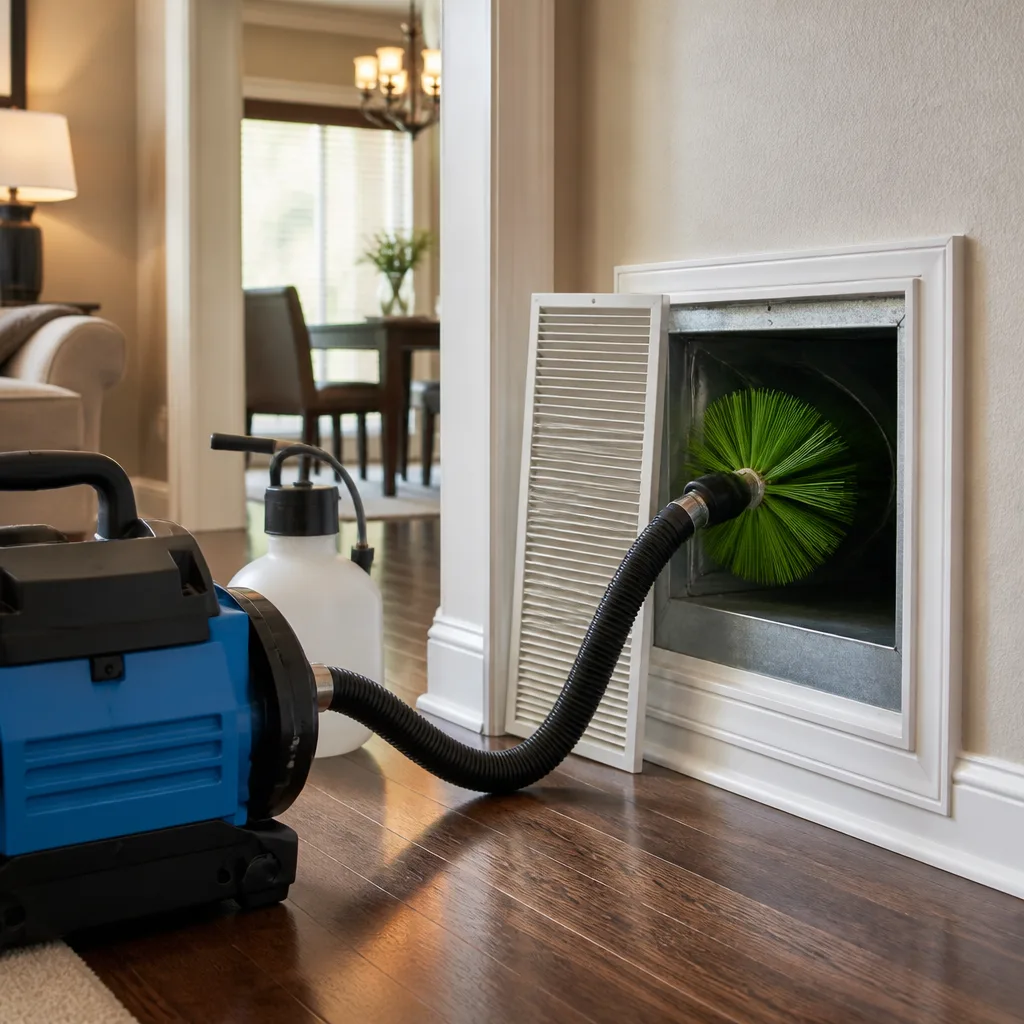 Sanitizing & deodorizing
Whole-system duct and dryer vent check with before-and-after photos - you see exactly what came out of your vents
That "$99 whole-house special" is a bait ad - the real number appears once they are in your hallway, or the "clean" is a shop-vac at the register. We photograph the inside of your ducts before and after instead.
Air Duct Cleaning Warning Signs: A Mayfair Homeowner’s Reference Guide
Visible dust on a supply register is the last warning sign, not the first. By the time dust collects on the grille, the ductwork has usually been shedding particulate into your rooms for weeks, and the useful signals came earlier: a zone that stopped keeping up, a furnace running a few minutes longer each cycle, a filter that loads faster every month. This guide is about those earlier signals. It walks through the mechanical and airflow indicators we look for in Mayfair homes, explains what each one points to inside the system, and shows you how to check most of them yourself with a flashlight, a thermometer, and your energy bill.
Quick Answer
The main early warning signs of a duct problem in a Mayfair home are uneven airflow between zones, a furnace or air handler running longer than it used to, a filter that clogs faster each month, musty or dusty odors near supply registers, and debris pulled into the system after renovation work. Visible dust on registers comes later. Catching these signals early usually means a smaller repair, because a leak or a loaded duct run is cheaper to address before it stresses the blower and the equipment.
Styles & brands we work with
- Whole-home duct cleaning
- Dryer vent cleaning
- Camera inspection
- Sanitizing & deodorizing
Table of Contents
- Airflow Asymmetry: When One Zone Stops Keeping Up
- HVAC Runtime Creep: The Signal on Your Energy Bill
- Odor Mapping: Musty, Acrid, and Dusty Smells Explained
- Filter Loading Rate as a Diagnostic Tool
- Post-Renovation Debris Signatures
- The Dryer Vent Signal Most Homeowners Miss
- How Mayfair’s Seasonal Swings Affect Duct Debris
- A Room-by-Room Self-Check You Can Do This Week
Airflow Asymmetry: When One Zone Stops Keeping Up
The first reliable sign of a duct problem is rarely a smell or a dust line. It’s a room that quietly stopped cooling or heating as well as the rest of the house. If the upstairs bedroom takes twenty minutes longer to reach temperature than the living room, or the register in the converted attic barely moves a tissue, that’s a supply-air problem, and it usually has one of four causes.
- A crushed or disconnected flexible duct. Flexible runs in tight joist bays or attic spaces can get pinched during other work, or pull loose at the collar where they meet the trunk.
- Leaking joints at the trunk and takeoffs. Leaks on a supply run bleed conditioned air into an attic or crawl space instead of the room, so the room gets less while the equipment works harder.
- Debris or a damper blocking the run. A closed balancing damper, a collapsed liner, or a buildup of construction dust can choke a single branch.
- Undersized or badly routed ductwork. Sometimes the asymmetry was there from the start and only becomes obvious when the equipment starts to lose capacity.
You can narrow it down without tools. With the system running, check the supply register in the weak room and compare the air movement to a register in a room that works well. Hold a thin tissue or a strip of paper against each grille; the difference in how it moves tells you whether you have a supply problem or a return problem. If the weak room’s return grille is pulling hard while its supply barely moves, you’re looking at a supply-side restriction or leak.
Airflow asymmetry is worth catching early because unbalanced static pressure pushes the blower to work against a restriction it can’t overcome. That is one of the reasons we treat air duct cleaning as a diagnostic visit as much as a service: cleaning a trunk and mapping its branches shows us where the restriction actually lives before anyone starts replacing equipment.
HVAC Runtime Creep: The Signal on Your Energy Bill
A gradually dirtying duct system announces itself in run time before it shows up on your registers. As a duct interior loads with dust film and the filter begins to restrict airflow, the blower moves less air per minute, and the equipment must run longer to move the same amount of heat out of or into the house. Nothing sounds broken. The system just works a little harder every month.
Here’s how to read it:
- Pick a baseline month. Note the cycle length on a mild day: how long the furnace or air handler runs before it shuts off. A stopwatch or the minute hand on a clock is enough.
- Repeat in the same weather. Compare again four to six weeks later on a day with similar outdoor temperatures. Runtime numbers only mean something against a similar load.
- Watch the bill alongside it. If usage climbs in a comparable billing period while your habits and thermostat settings haven’t changed, that’s a load signal worth explaining.
In Mayfair, the swing between a humid summer and a cold winter means the system runs hard in both directions, so run-time creep shows up twice a year. A system that’s simply a little oversized for the house may cycle short and often; a system fighting a restricted duct run cycles long. Both feel normal from the couch. The difference shows up in the numbers.
Runtime creep alone doesn’t prove your ducts need cleaning. It’s one signal, and a refrigerant charge issue or a failing blower capacitor produces a similar pattern. That’s why we pair run-time readings with a physical look at the filter, the coil compartment, and the returns before drawing a conclusion.
Odor Mapping: Musty, Acrid, and Dusty Smells Explained
Smell is the most specific warning sign a duct system gives, because different smells implicate different parts of the system. If you can name the smell, you’ve usually narrowed the diagnosis before anyone opens a panel.
Musty: Biological Growth
A musty, damp-earth smell coming from supply registers usually points to moisture. Condensate from a poorly drained coil pan, a humid summer pulling moisture into a cool duct run, or a return pulled from a damp basement can all support biological growth on duct surfaces and on the coil itself. Cleaning alone won’t fix a moisture problem; the source has to be found first. In humid Mayfair summers, the coil compartment and the pan under it are the first places to look.
Acrid: Electrical or Heat Exchanger
An acrid, sharp, or metallic smell is not a cleaning issue. It can indicate an electrical component overheating or, in a gas furnace, a problem at the heat exchanger. Shut the system down and call a licensed HVAC technician. We don’t diagnose combustion or electrical faults, and nobody should keep running equipment that smells hot while waiting to decide.
Dusty: Mechanical Debris
A dry, dusty smell that’s strongest at startup is the ordinary signature of accumulated debris sitting on duct walls and in the air handler compartment. It gets pushed through the supply air the moment the blower comes on. This is the most common odor we’re called about, and it’s the one a proper mechanical cleaning addresses directly.
Odor also tells you how far cleaning needs to go. A dusty smell usually means a trunk-and-branch cleaning plus the air handler compartment. A musty smell means the coil and drain pan come first. We carry HVAC cleaning as a standalone service for exactly this reason: the coil and housing are where most odors actually live, and cleaning only the visible runs misses them.
Filter Loading Rate as a Diagnostic Tool
Most homeowners treat the filter as a replacement chore. It’s actually the cheapest diagnostic tool in the system. A filter is a sampling device: what it catches, and how fast, tells you what’s moving through the ductwork and how much of it there is.
- Normal loading: a one-inch filter at a typical Mayfair home’s traffic level should last roughly the manufacturer’s stated interval between changes. Note the interval printed on the filter, and change it on that schedule.
- Fast loading: if a filter that used to last a season is visibly grey in half that time, the duct system is moving more particulate than it should. That points to a leak pulling air from an unconditioned attic or crawl space, a return that’s open to a dusty basement, or an interior that’s holding debris.
- Edge-loaded filters: dust concentrated around the frame instead of evenly across the face usually means air is bypassing the filter through an unsealed gap. That gap sends dust straight past the filter and onto the coil.
- Loaded filter after cleaning: if a fresh filter loads fast immediately after a duct cleaning, the cleaning missed part of the system, or there’s an ongoing source the cleaning couldn’t remove.
Filter loading is also the reason we point homeowners toward better filtration once the ducts are cleaned. Cleaning an interior and then putting a low-efficiency throwaway filter back in front of it doesn’t hold the result. A properly sized media filter changes the arithmetic. We stock Honeywell and Aprilaire air-quality products for this exact step, including filtration, purification, and humidity control, so the post-clean setup doesn’t depend on a second contractor.
Post-Renovation Debris Signatures
Renovation work is the single most common trigger for duct contamination we see in Mayfair, and it leaves recognizable signatures. Drywall dust is the big one: sanding sends fine gypsum particulate into the air for days, and if the system runs during that work, the dust settles throughout the duct interiors and the air handler compartment. It doesn’t look like ordinary household dust because it’s finer and more abrasive.
Each type of work leaves its own sign:
- Drywall and plaster. Fine white or grey dust on register fins and a chalky film on the blower wheel. If the wheel looks coated after a renovation, the duct interiors are too.
- Flooring. Sawdust from sanding old hardwood, and fine dust from cutting engineered flooring, both drift into returns. If returns sit near the floor, they catch the majority of it.
- Insulation work. Fiberglass fibers pulled into the system travel further and settle differently than drywall dust. A system that ran while insulation was being installed can carry fallout across the whole trunk.
- Demolition. Debris pulled into open ducts from a removed wall or ceiling, especially if registers were left uncovered.
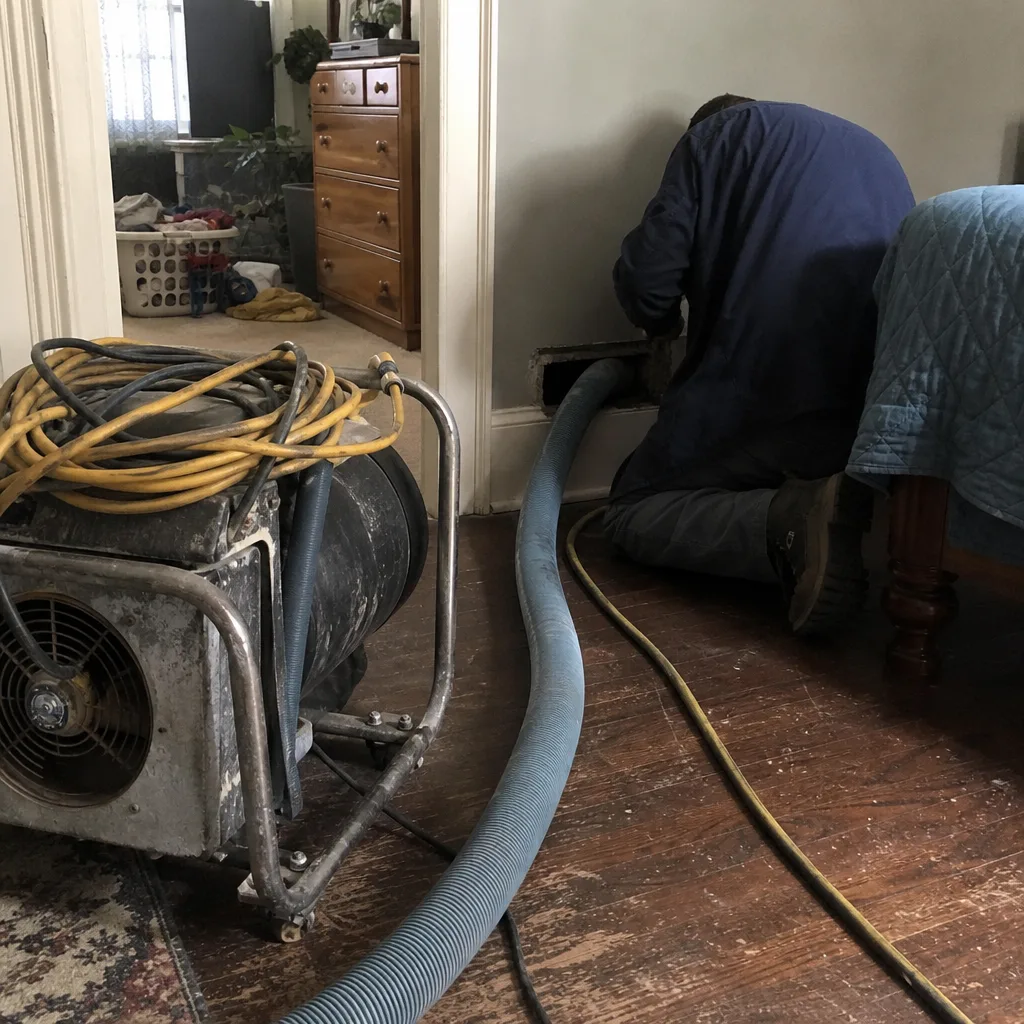
The practical rule: if a renovation involved cutting into walls or ceilings and the HVAC system ran at any point during the work, the ducts should be inspected before the next heating or cooling season. Nobody’s fault, just how air handling works. When we clean after a renovation, we use Abatement Technologies negative-air machines to hold dislodged particulate under containment while we work, so the dust we’re removing doesn’t recirculate into the rooms you just finished.
The Dryer Vent Signal Most Homeowners Miss
The dryer vent is a duct system too, and it’s the one with a fire-safety margin this narrow: lint accumulation restricts airflow, which makes the dryer run hotter and longer, which lets more lint collect. That loop doesn’t announce itself. The clothes just take a second cycle, then a third.
The signals to watch for:
- Clothes need more than one cycle to dry completely.
- The dryer body feels noticeably hot to the touch during a normal cycle.
- The outside vent flap barely moves, or lint is visible around the flap.
- A musty smell in the laundry area, or the lint screen filling up faster than it used to.
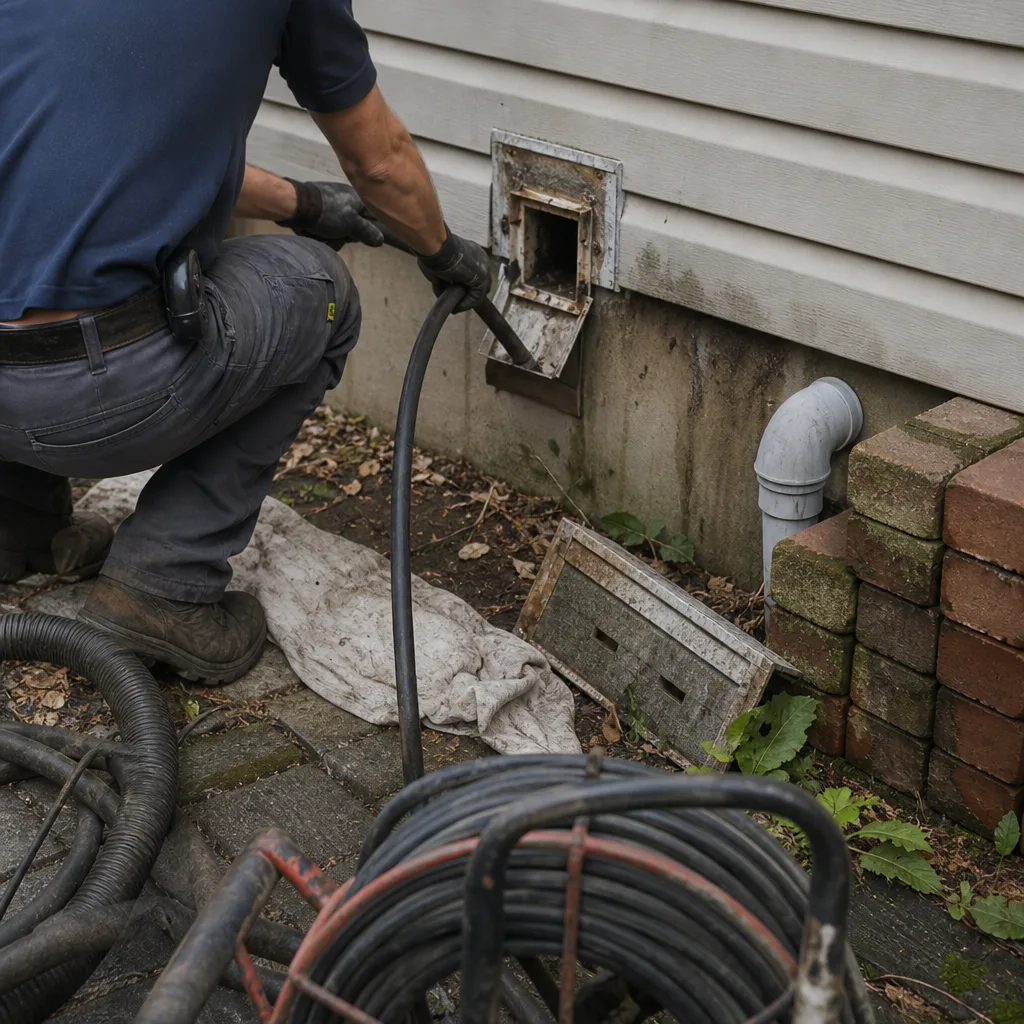
Lint accumulation in a dryer vent is a fire-safety concern, not a comfort one, and it’s worth checking every year regardless of what your ducts look like. We keep dryer vent cleaning on the menu as its own service for that reason: the vent is part of the ventilation system, and a clean duct run doesn’t help if the vent is choked.
How Mayfair’s Seasonal Swings Affect Duct Debris
Mayfair’s climate gives duct systems a double workout. Summer humidity is the key factor for bio-growth, because cool duct surfaces in humid air condense moisture, and moisture is what biological growth needs to take hold on coil fins and duct liners. A slight musty smell that appears in July and fades in October usually points to condensation and a slow-growing biological film, not a permanent problem. Check the coil and drain pan. If the pan holds standing water, that’s the source.
Winter is the opposite. Homes run closed up with the heat on for months, air exchange with the outdoors drops, and whatever particulate is sitting in the ductwork recirculates through the living space. Dusty, dry air in a closed-up house in January is often a duct interior issue showing itself because nothing is diluting it anymore.
The result is a pattern that repeats each year: summer mustiness, winter dust. Airflow asymmetry often becomes visible at the first major season change, when the system is asked to carry the full load after months of moderate weather. If your system hasn’t been serviced in a few years, a look at the duct interiors before the season starts saves you from troubleshooting after the first cold week.
A Room-by-Room Self-Check You Can Do This Week
None of this is a substitute for a professional inspection, but a simple walkthrough tells you whether it’s worth one. Take a flashlight and twenty minutes.
- Walk every supply register. Feel the air movement at each one. Note the rooms on your list where it’s clearly weaker than the rest.
- Shine the light into a register boot. Look at the first few inches of duct interior for a heavy dust film, debris, or staining. A white film after renovations is drywall dust; a black or grey film is ordinary household accumulation.
- Check the return grilles. Returns draw the most air and collect the most debris. Lift the grille and look at the filter behind it. Is it grey, clogged at the edges, or coated with a chalky film?
- Sniff the supply air. Note any musty, acrid, or dusty smell. Remember where it was strongest.
- Read the filter and the energy bill. Note the last filter change date and the interval since the one before. Compare two utility bills from similar weather.
Write it down. That one-page record is the most useful thing you can hand an inspector, and it usually shows the pattern faster than any single reading. In our experience, most of the cases that turn out to need work start with a room on the list where airflow was weaker and the filter was loading faster than it should.
Common Mistakes to Avoid
- Waiting for visible dust. Light haze on a register means debris has been circulating for weeks. Pay attention to the early signs, not the late one.
- Trusting a single source. One room that feels warm is not evidence. A pattern across three rooms, matched to the filter, is.
- Running the system during a renovation. If dust is in the air, the system will pull it into the ducts. Cover the registers or switch the system off during the dustiest days.
- Assuming a new filter fixes it. A filter catches what’s airborne. It doesn’t remove the film already settled on the duct walls.
- Cleaning the ducts and stopping there. A clean system with an unsealed leak refills fast. If a leak exists, repair and sealing belong in the same visit.
- Ignoring the dryer vent. Its early signs (slow drying, hot dryer body) are different from the HVAC signs, and its failure mode is worse.
- Adding better filtration before cleaning. A high-efficiency filter in front of a dirty system loads immediately and restricts airflow further. Clean first, then improve filtration.
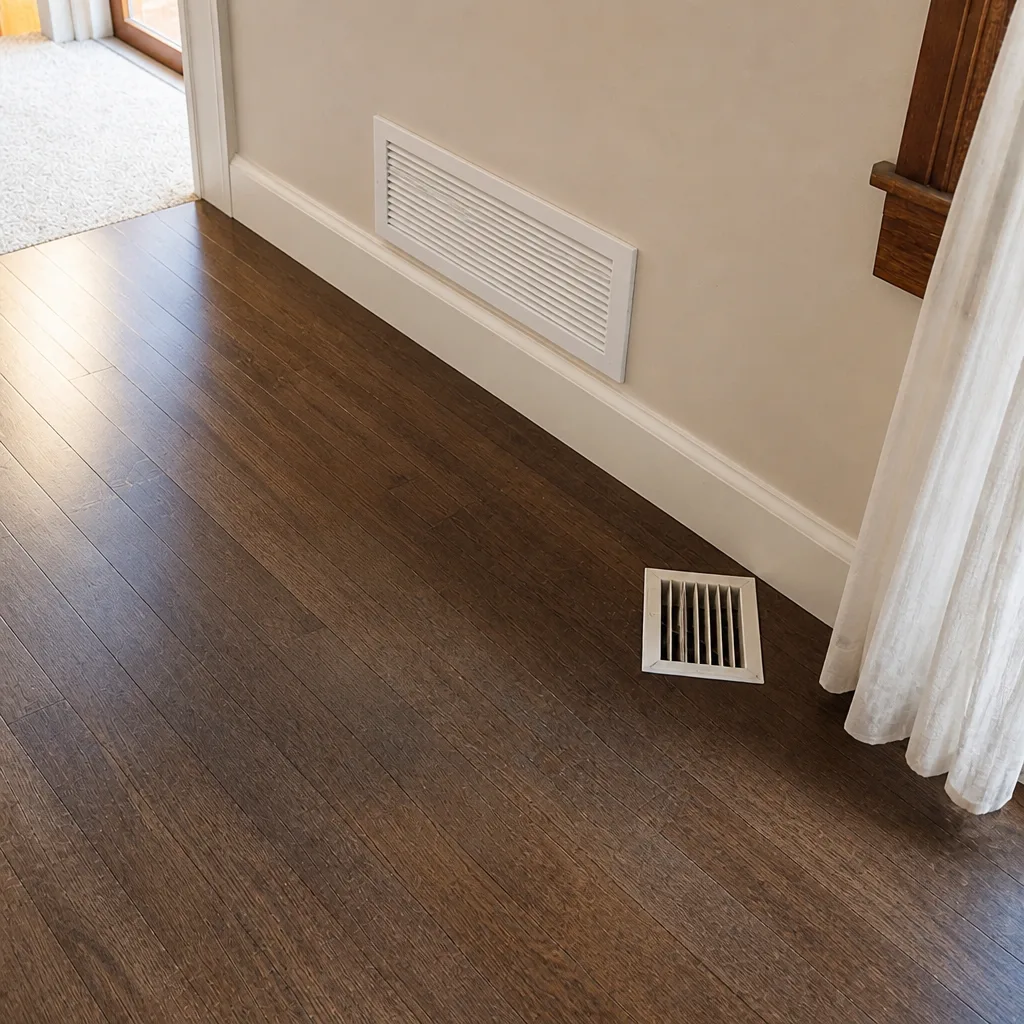
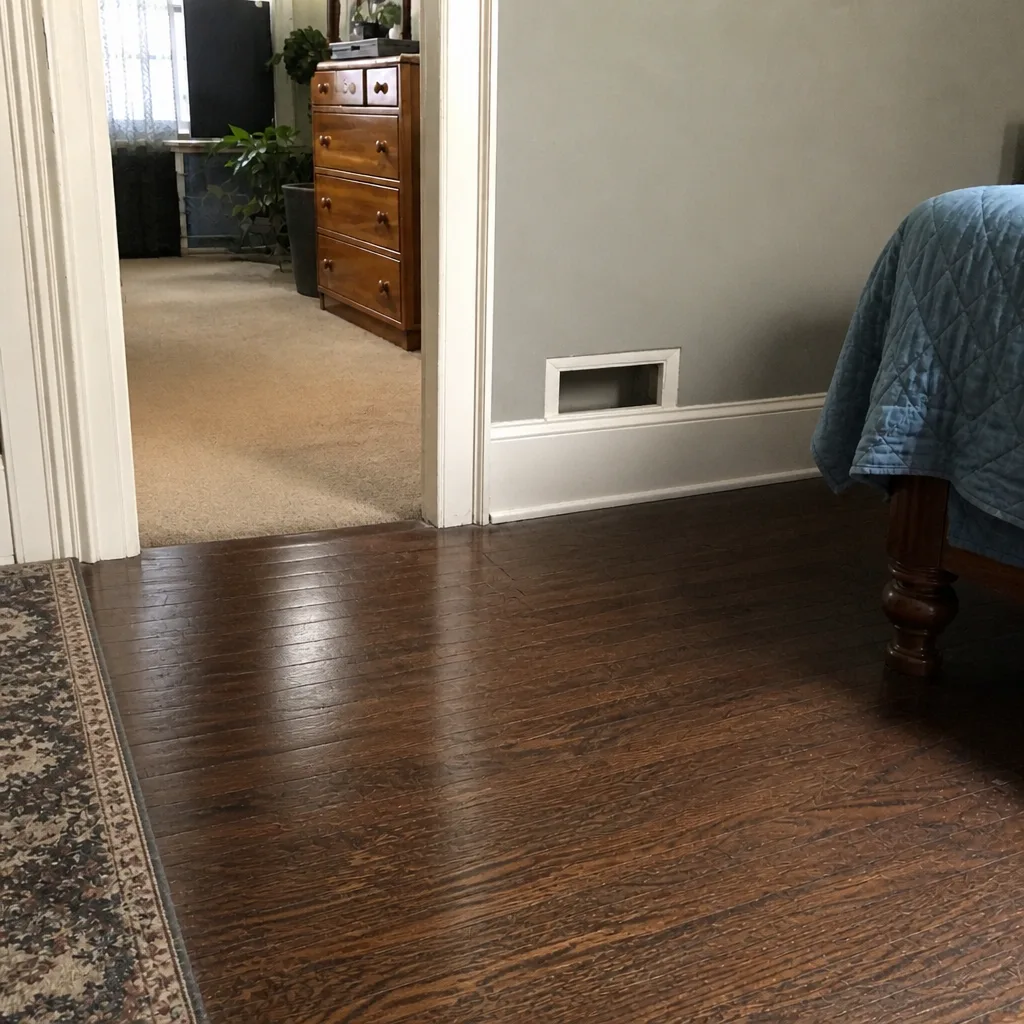
See the difference
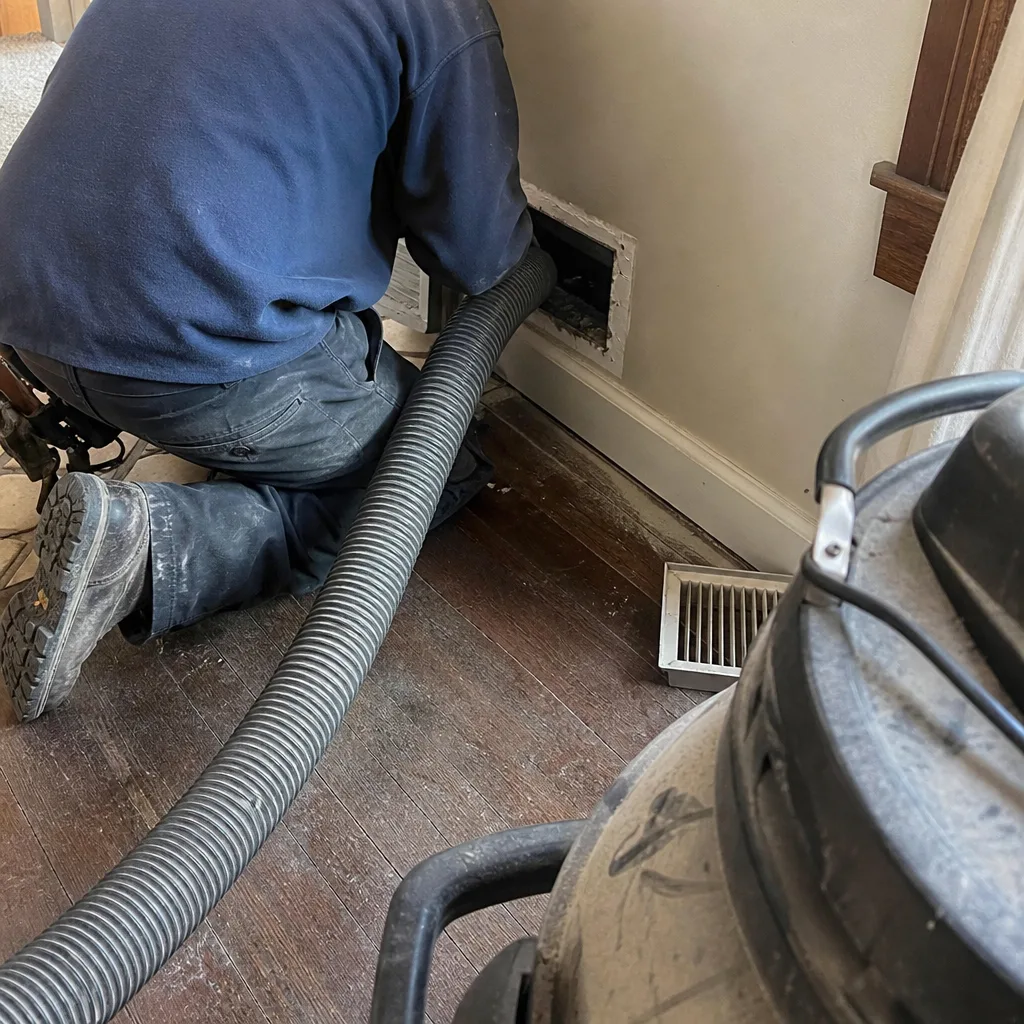 Before
 After
 Before
 After
 Before
 After
When to Call a Professional
Call when two or more of the early signals show up at once: a weak zone plus fast filter loading, a musty smell plus a slow-loading filter, or a renovation plus a chalky film in the register boots. Call immediately if you smell an acrid or hot smell from any register or from the air handler; shut the system off first. Call before a season if the system hasn’t had a physical look in a few years and the filter is loading faster than it used to.
Air Duct Cleaning Mayfair offers free estimates in Mayfair. Our technicians have up to 8 years of experience, and we carry cleaning, repair and sealing, HVAC cleaning, and air-quality upgrades in one scope, so the visit doesn’t end with a recommendation to call someone else. Call (888) 611-5717.
Frequently Asked Questions
The earliest reliable sign is airflow asymmetry: one zone receiving clearly less supply air than the rest of the house while the filter loads faster than it used to. That combination usually points to a leak, a crushed run, or a restricted branch. Visible dust on registers comes later. Call (888) 611-5717 for a free estimate.
There’s no universal interval. It depends on the system, the filter you run, whether there has been a renovation, and whether pets are in the house. A good rule: inspect when two or more early signals appear, and inspect after any renovation that cut into walls or ceilings while the system was running. Call (888) 611-5717 for a free estimate.
Cheap quotes usually cover far less work: a vacuum at each register, sometimes a whipping tool in the main trunk only, often no air handler compartment and no repair. The work doesn’t remove the settled film on branch runs and the coil compartment, which is where most of the particulate lives. We quote the whole system rather than a register count, so the scope is clear before we start. Call (888) 611-5717 for a free estimate.
No. A musty smell points to moisture, and moisture often comes from a condensate pan that isn’t draining or a humid summer condensing on cool duct surfaces. Sometimes there’s biological growth on the coil or liner, and sometimes the smell is simply trapped moisture. The source has to be located before cleaning makes sense. Call (888) 611-5717 for a free estimate.
Turning it off during the dustiest work helps a great deal, and we recommend covering the registers as well. But if the system ran at any point during drywall sanding, cutting, or insulation work, the particulate already settled inside the ducts and needs removing. Call (888) 611-5717 for a free estimate.
We connect a negative-air machine to hold the duct system under containment, then use rotary contact tools to agitate the duct interior and extract the debris. The Abatement Technologies negative-air machines capture what’s dislodged, so it doesn’t recirculate into your rooms. After cleaning, we inspect, and we can seal any leaks we find as part of the same visit. Call (888) 611-5717 for a free estimate.
The Bottom Line
Dust on a register is the late warning, not the early one. The signs that actually matter show up first: a zone that stopped keeping up, run time that creeps up in the same weather, a filter that loads faster every month, and a smell you can name. Those signs point to a mechanical issue, and the faster you find it, the smaller the repair. Run the self-check this week and write down what you find. If two or more of the early signals show up, a free estimate in Mayfair is the next step, and a full scope that covers cleaning, repair, sealing, and air-quality upgrades is worth the call. Call (888) 611-5717 for a free estimate. We answer 24/7. Fast dispatch from 7am to 7pm, Sunday through Friday.
Written by the team at Air Duct Cleaning Mayfair.